
Leipzig Tourismus und Marketing GmbH
Leipzig in the 2026 Theme Year “TACHELES”: Jewish Life Past and Present
- Bild-Infos
- Download
- 5 weitere Medieninhalte
2 Dokumente
- Media release_2026 T~Life in Leipzig.pdf
PDF - 305 kB - Fact Sheet_Theme Yea~CHELES' Leipzig.pdf
PDF - 363 kB
Leipzig in the 2026 Theme Year “TACHELES”: Jewish Life Past and Present
Leipzig, 26 February 2026. In 2026, Leipzig plays a central role in the statewide theme year “TACHELES. Year of Jewish Culture in Saxony.” Borrowed from Yiddish and commonly used in German to mean “speaking plainly”, the title signals an open and direct engagement with Jewish history and contemporary Jewish life. The theme year, held under the motto “Jüdisch. Sächsisch. Menschlich.” (“Jewish. Saxon. Human.”), marks 100 years since the founding of the first association of Jewish communities in Saxony. Across the Free State, more than 365 events will take place through 12 December 2026, highlighting the historical depth, cultural diversity and contemporary relevance of Jewish life.
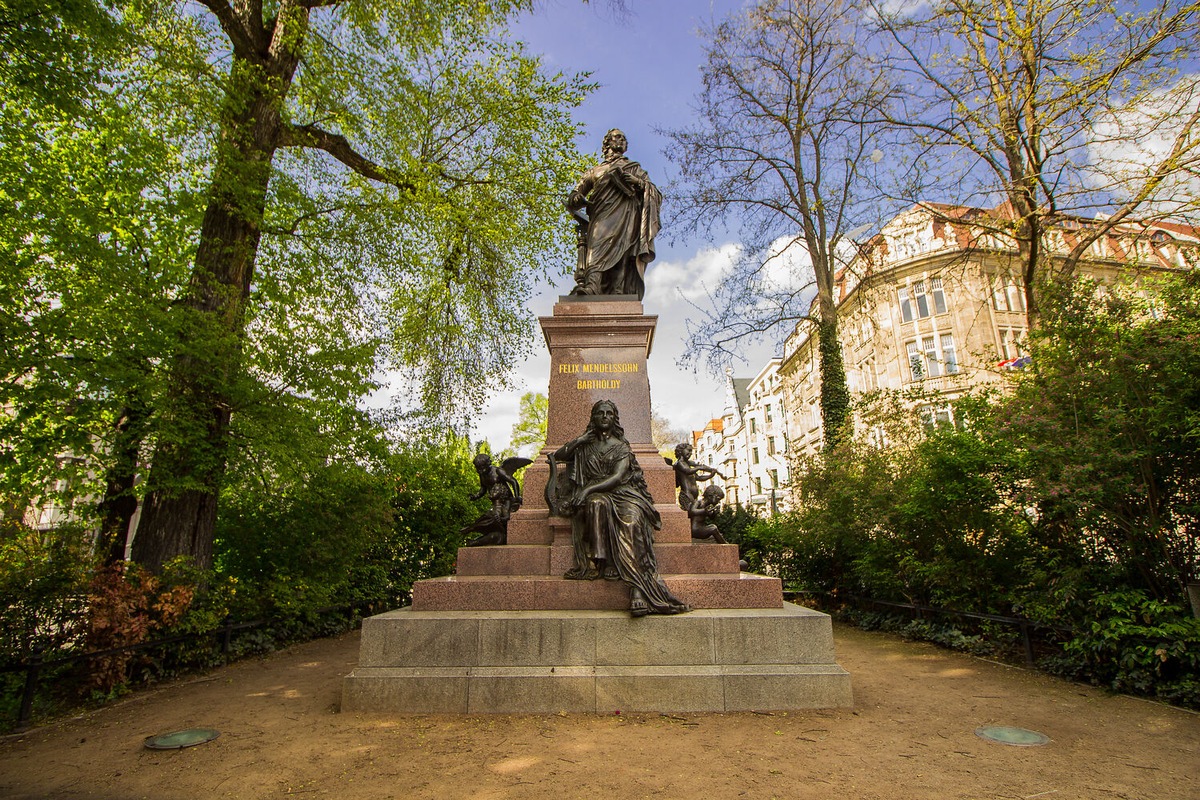
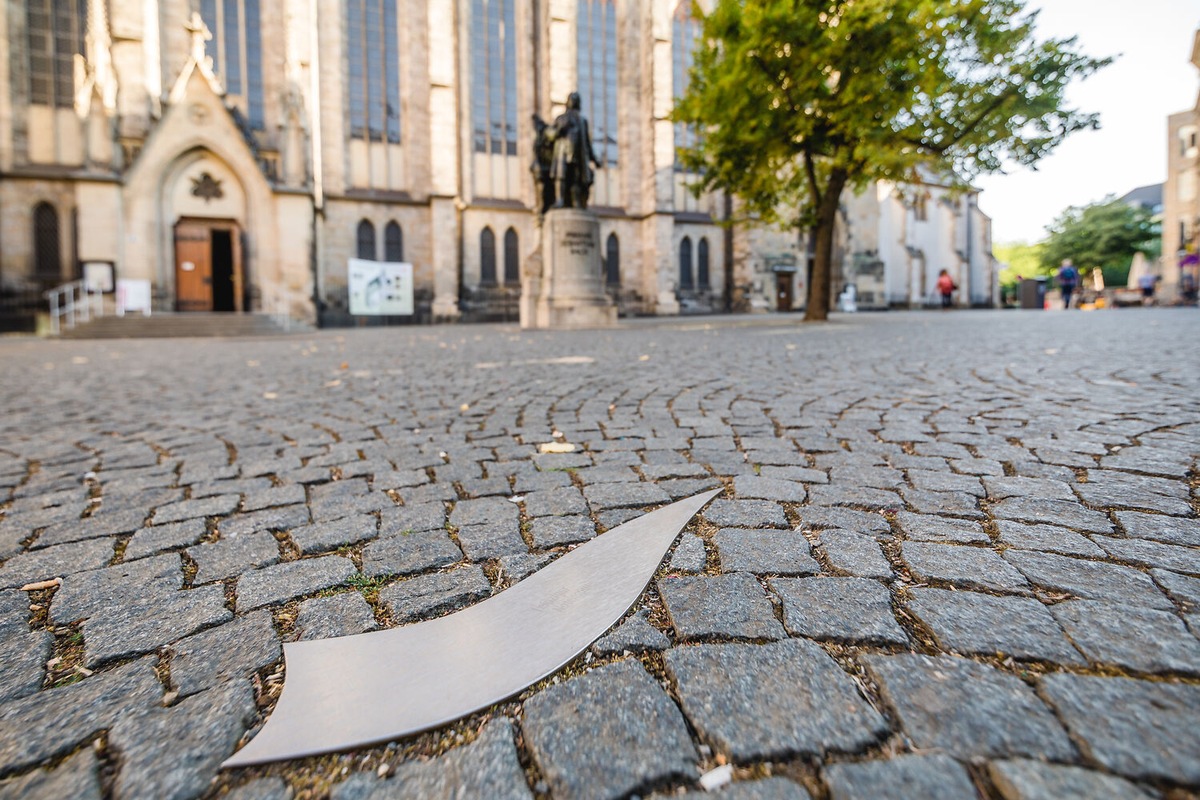
In Leipzig, more than 80 events organised by over 20 cultural institutions examine Jewish heritage and contemporary presence as an integral part of the city’s cultural identity. A central moment of the programme is Leipzig’s 17th Jewish Week – “Tacheles 2026” from 21–28 June 2026, which brings together concerts, exhibitions, lectures and community events. During the Jewish Week, coinciding with the Fête de la Musique on 21 June 2026, the City of Leipzig will inaugurate the northern route of the Leipzig Music Arc (Leipziger Notenbogen), extending the existing Leipzig Music Trail (Leipziger Notenspur). The new route leads to former synagogue sites and to residences and memorials connected to Jewish musicians, including Felix Mendelssohn Bartholdy, Gustav Mahler and Erwin Schulhoff.
Throughout the year, the programme unfolds through concerts, exhibitions and contemporary artistic formats. These include the exhibition “New Beginnings and Tradition – 30 Years of Contemporary Jewish Life in Saxony. Photographs by Silvia Hauptmann” from 19 May–1 October 2026 at the City Archive, documenting renewed communal life since the 1990s. Leipzig’s municipal museums contribute exhibitions such as “Fred Stein. Focus on People” (1 April–31 July 2026), presented at the Capa House and the German National Library Leipzig, alongside presentations of the Mittelmann Photo Archive, while re-examining their own collections for Jewish traces and narratives.
The Museum of Fine Arts Leipzig (MdbK) will present the special exhibition “Art Within Four Walls: Jewish Families and Their Collections in Leipzig” from 1 October 2026 to 31 January 2027. The exhibition examines the collecting culture and patronage of eleven Jewish families who played a formative role in Leipzig’s artistic life in the late nineteenth and early twentieth centuries. Featuring paintings, sculptures and works on paper from private collections — including French and German Impressionism and Classical Modernism — it traces networks of art patronage and civic engagement that helped shape the city’s museum landscape. At the same time, it addresses the dispossession and persecution of these families after 1933, situating their biographies within the broader context of National Socialist expropriation and cultural loss.
The musical strand includes “Con Spirito” – the Leipzig Chamber Music Festival from 12–20 September 2026, which in its sixth season engages directly with the theme year under the focus “Jewish Tunes of the Leipzig Romantics.” The programme centres on artistic networks and friendships linking the Schumann and Mendelssohn families with figures such as Joseph Joachim, Giacomo Meyerbeer and Heinrich Heine. The festival opens on 12 September in the Mendelssohn Hall of the Gewandhaus and unfolds across historic composers’ residences and European heritage sites in the city, including the Mendelssohn-Haus and the Schumann-Haus.
The European Music Trails Festival (Festival Europäische Notenspuren) from 14–21 November 2026 is dedicated to Leipzig’s European musical heritage. Held at various venues across the city, the festival highlights composers and musicians who lived, studied or worked in the city and whose influence resonated beyond it. The 2026 edition initiates a multi-year engagement with Leipzig’s Jewish musical legacy and turns to Jewish music along the historic Via Regia, presenting sounds from East and West.
Contemporary Jewish artistic perspectives are also foregrounded in performance, theatre and music formats across the city, reflecting the diversity of today’s Jewish cultural production. A particular highlight is the premiere of Herman Berlinski’s “Avodat Shabbat”, performed by the Leipzig Synagogue Choir together with the Academic Orchestra in the eastern hall of Leipzig Central Station on 27 September 2026, reconnecting the work of the Leipzig-born composer with the city. Additional highlights include dedicated concerts within the “Großes Concert” series of the Gewandhausorchester featuring works by Paul Ben-Haim and Mendelssohn, alongside readings and further exhibitions.
The City of Leipzig also continues its one-week “Visitors’ Programme for Former Jewish Leipzigers and their Descendants“, facilitating personal return and historical reconnection. For residents and visitors seeking deeper insight into Jewish history and life in Leipzig, guided thematic tours are offered in the city centre.
Permanent Sites of Jewish History and Culture in Leipzig
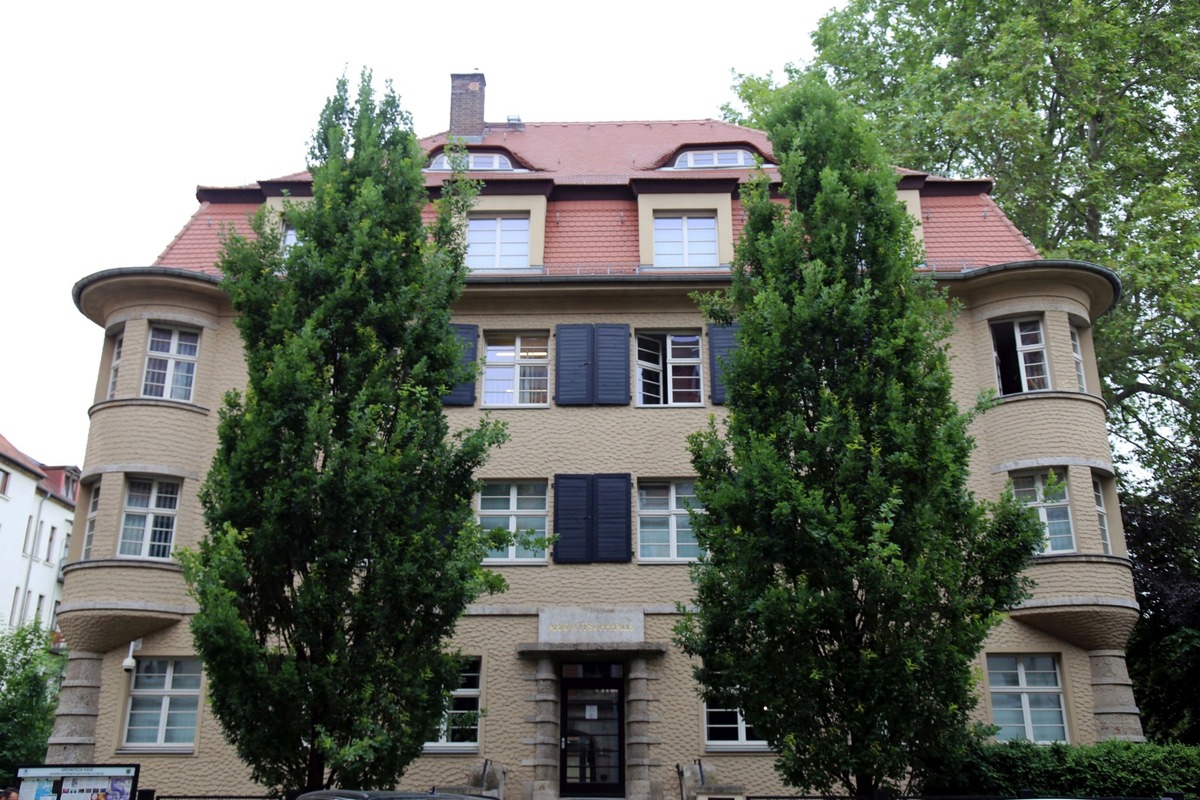
Beyond the programme year, Jewish life and remembrance remain embedded in Leipzig’s urban landscape. The Ariowitsch-Haus serves as a cultural and community centre, hosting exhibitions, lectures and public dialogue.
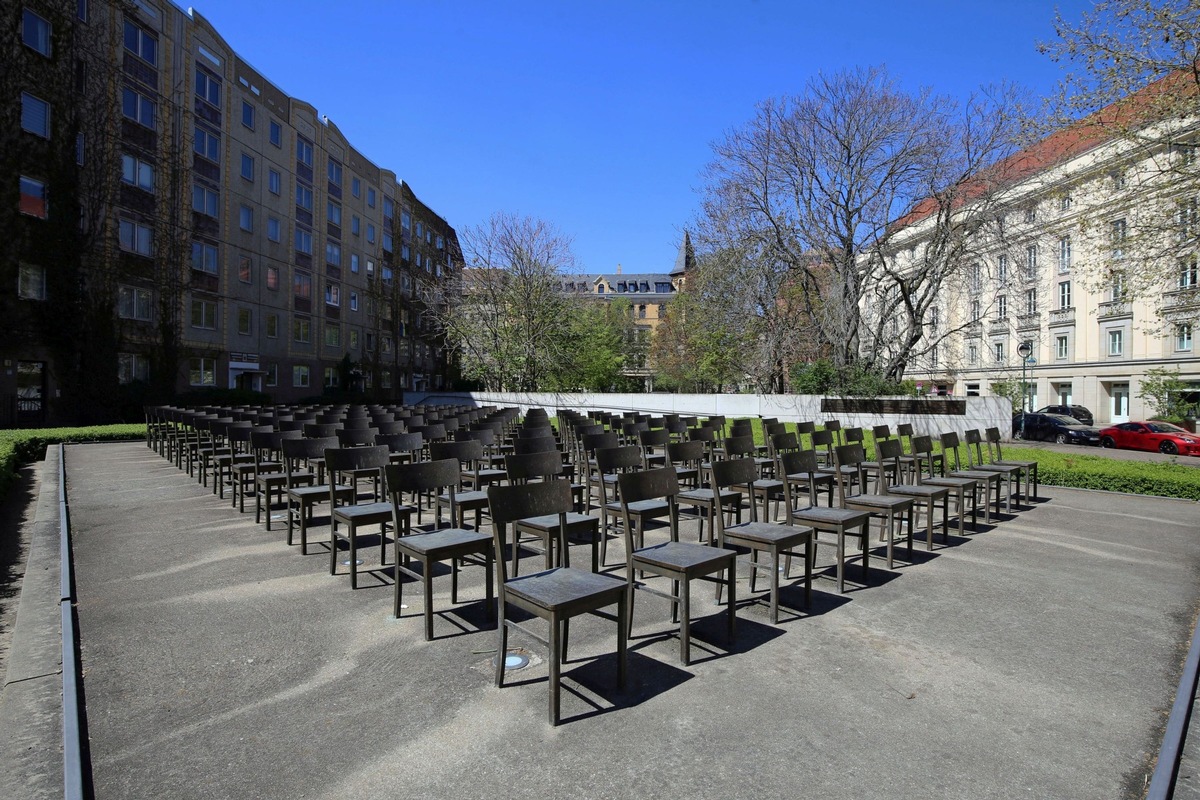
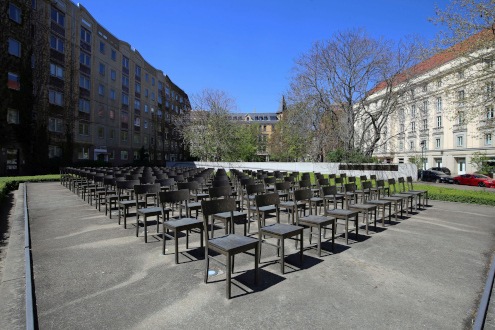
Several memorial sites mark the ruptures of 1938. The Synagogue Memorial on Gottschedstraße/Zentralstraße, composed of 140 bronze chairs, outlines the footprint of the Great Community Synagogue destroyed during the November Pogrom. Installed in 2001, the walkable artwork recalls the expelled and murdered Jewish community. In the Kolonnadenviertel (Apels Garten 4), a sound installation at the site of the former Ez-Chaim Synagogue – inaugurated in September 2024 – makes the lost space acoustically perceptible. Historical cantorial recordings, including those of Chief Cantor Wilkomirsky, are interwoven with contemporary cello compositions and student audio projects, transforming what is today a parking area into a place of reflection.
The Mendelssohn House preserves the composer’s final residence, where he lived from 1845 until his death in 1847 and completed the oratorio “Elijah”. A reconstructed Mendelssohn monument – originally removed in 1936 – stands today in front of St Thomas’ Church as a reminder of cultural rupture and restitution.
The Old Jewish Cemetery (1864–1928) on Berliner Straße and the New Jewish Cemetery in Delitzscher Straße, still in use today, further testify to the long-standing and continuing presence of Jewish life in the city.
Historical Background and Present Jewish Community
In the early 20th century, Leipzig was home to one of Germany's most significant Jewish communities. By the mid-1920s, around 12,500 Jewish residents lived there, making it the sixth-largest Jewish community in the country. Jewish entrepreneurs, publishers, fur traders, bankers and professionals contributed to Leipzig's development as an international trade fair and publishing centre, and to its intellectual and cultural life.
Following the National Socialists' seizure of power in 1933, Jewish citizens were progressively excluded from public and economic life. The November Pogrom of 1938 marked a decisive escalation: synagogues were destroyed, businesses were looted, and many Jewish residents were arrested. Systematic persecution, expropriation and deportation followed, leading to the near destruction of Jewish life in Leipzig.
Today, the Jewish community in Leipzig numbers around 1,300 members. Re-established after 1945 and strengthened by immigration in the 1990s, it is today an active presence in the city’s civic and cultural life.
Further Information:
Theme Year “Tacheles”
City of Leipzig – Jewish Life
www.leipzig.de/rathaus/stadtgeschichte-und-gedenken/juedisches-leben#c222692
Leipzig Tourism
Would you like to experience the Leipzig Region first-hand on a media trip that showcases its many diverse aspects? Please feel free to contact us and let us know about your interests. Further information is available at www.leipzig.travel/press
Steffi Gretschel
Head of International Public & Media Relations

Phone +49 341 7104-334
 international-pr@ltm-leipzig.de •  www.leipzig.travel/en
Leipzig Tourismus und Marketing GmbH • Grimmaischer Steinweg 8 • 04103 Leipzig • Germany
CEO: Volker Bremer • Amtsgericht Leipzig [Leipzig District Court] • Registration number: HRB 123 48 • Vat number: DE 1845 16 233
This initiative is co-financed using tax revenues, in accordance with the budget approved by the Members of the Saxon State Parliament.