

GEA develops an integrated approach to lautering high-gravity wort
- Bild-Infos
- Download
Ein Dokument
Where high-gravity brewing reaches technical and economic limits, SUD-2030 takes a step back and looks at the full process. The research project examines whether combining milling, mashing and lautering can enable stable processing at higher wort concentrations with more efficient use of resources.
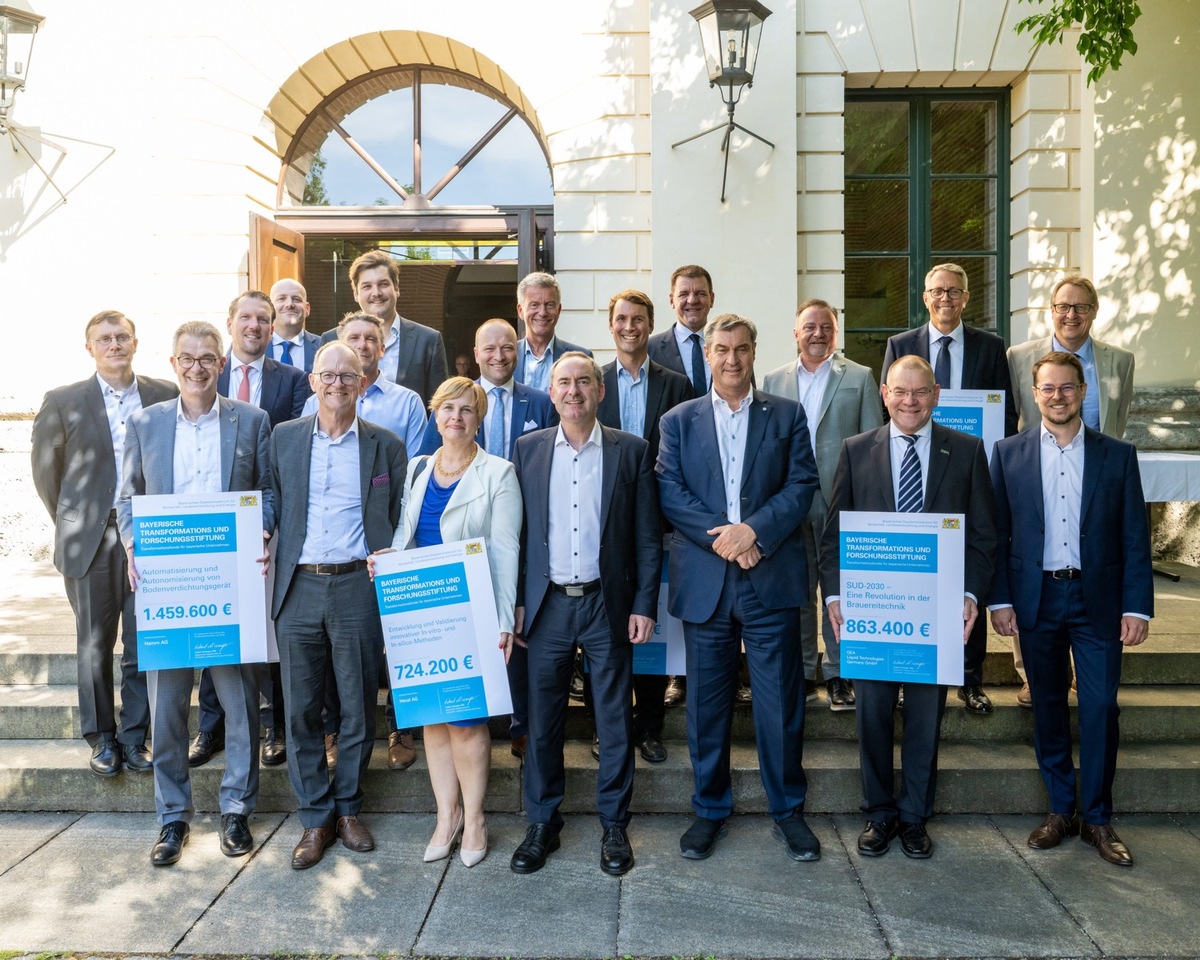
Bavarian transformation funding for research project SUD-2030
GEA develops an integrated approach to lautering high-gravity wort
- For the first time, the SUD-2030 research project brings milling, mashing and lautering together in a single development approach instead of optimizing each process step separately
- The project aims to enable higher wort concentrations and, in turn, more resource-efficient and compact brewhouse concepts
- The Free State of Bavaria is supporting the project through the transformation fund
Düsseldorf (Germany), July 17, 2026 – Higher wort concentrations are considered an important lever for improving energy efficiency and sustainability in breweries. The more concentrated the wort, the less water has to be heated, cooled or treated during production. This reduces energy and water consumption per unit of beer produced and can also make brewhouse systems more compact and cost-effective.
However, existing lautering systems reach technical and economic limits in high-gravity brewing. In the SUD-2030 research project, GEA is therefore taking an integrated approach that treats milling, mashing and lautering as one connected system rather than as separate process steps.
“The performance of a brewhouse does not depend on lautering alone. Milling, mashing and lautering all affect one another, and that is where we see the greatest potential,” says Daniel Heller, Project Manager Research & Development at GEA. “Instead of improving each step on its own, we’re developing them as one system. This should give breweries more options in how they use resources and design future brewhouses.”
Lautering remains a key step in the brewhouse
Lautering has a major influence on the economics of a brewhouse. It affects production times, extract yield, wort quality and overall plant design.
SUD-2030 investigates how milling and mashing can create better conditions for the subsequent lautering process. The project is intended to generate new insights for future brewhouse designs and explore the potential for higher wort concentrations while maintaining stable process conditions.
The development work ranges from laboratory studies and pilot-scale trials to a demonstrator operated under near-industrial conditions.
Bringing research and industrial practice together
The project combines expertise in process engineering, plant development and brewing technology at GEA’s Kitzingen site, where the company has been developing technologies for the international brewing industry for many decades.
“We are very pleased to receive this support from the Free State of Bavaria,” says Jens Neidhardt, Managing Director of GEA Liquid Technologies. “It gives us the opportunity to take this research step by step from the laboratory to pilot trials and then into near-industrial testing. This strengthens our innovation work in Kitzingen and the engineering skills that keep German industrial plant engineering competitive.”
GEA is working with research partners in Bavaria, including the Technical University of Munich, to provide scientific support for the project. GEA intends to transfer the findings gradually into industrial applications and validate them under realistic operating conditions.
The Bavarian Transformation and Research Foundation is funding the project through its transformation fund for Bavarian companies undergoing structural change.
NOTES TO THE EDITOR
- More information about GEA
- To the GEA Media Center
- Follow GEA on LinkedIn, Youtube
Contact Media Relations
GEA Group Aktiengesellschaft
Fanny Förster
Ulmenstr. 99, 40476 Düsseldorf, Germany
Phone +49 211 9136-1504
 fanny.foerster @gea.com
About GEA
GEA is one of the world’s largest suppliers of systems and components to the food, beverage and pharmaceutical industries. The international technology group, founded in 1881, focuses on machinery and plants, as well as advanced process technology, components and comprehensive services. For instance, every second pharma separator for essential healthcare products such as vaccines or novel biopharmaceuticals is produced by GEA. In food, every fourth package of pasta or every third chicken nugget are processed with GEA technology.
With more than 18,000 employees, the group generated revenues of about EUR 5.5 billion in more than 150 countries in fiscal year 2025. GEA plants, processes, components and services enhance the efficiency and sustainability of customers’ production. They contribute significantly to the reduction of CO2 emissions, plastic usage and food waste. In doing so, GEA makes a key contribution toward a sustainable future, in line with the company’s purpose: ”Engineering for a better world.”
GEA is listed on the DAX, the STOXX® Europe 600 Index and is also a constituent of the leading sustainability indices DAX 50 ESG, MSCI Global Sustainability and Dow Jones Best-in-Class World.
More information can be found online at gea.com.
If you do not want to receive any further information from GEA, please send an e-mail to pr@gea.com.
About the GEA Foundation
The GEA Foundation, established in 2025 by GEA Group, supports global and local projects in STEM education, child poverty reduction, infrastructure access and disaster relief. Through its Mission 30 strategy, GEA commits to donating one percent of annual net profit to build resilient communities.
More information can be found online at gea.com/foundation.