
Independent Audits Confirm The Good Cashmere Standard’s Transparency and Sustainability in Cashmere Production
.jpg.jpg)
- Bild-Infos
- Download
- 7 weitere Medieninhalte
Ein Dokument
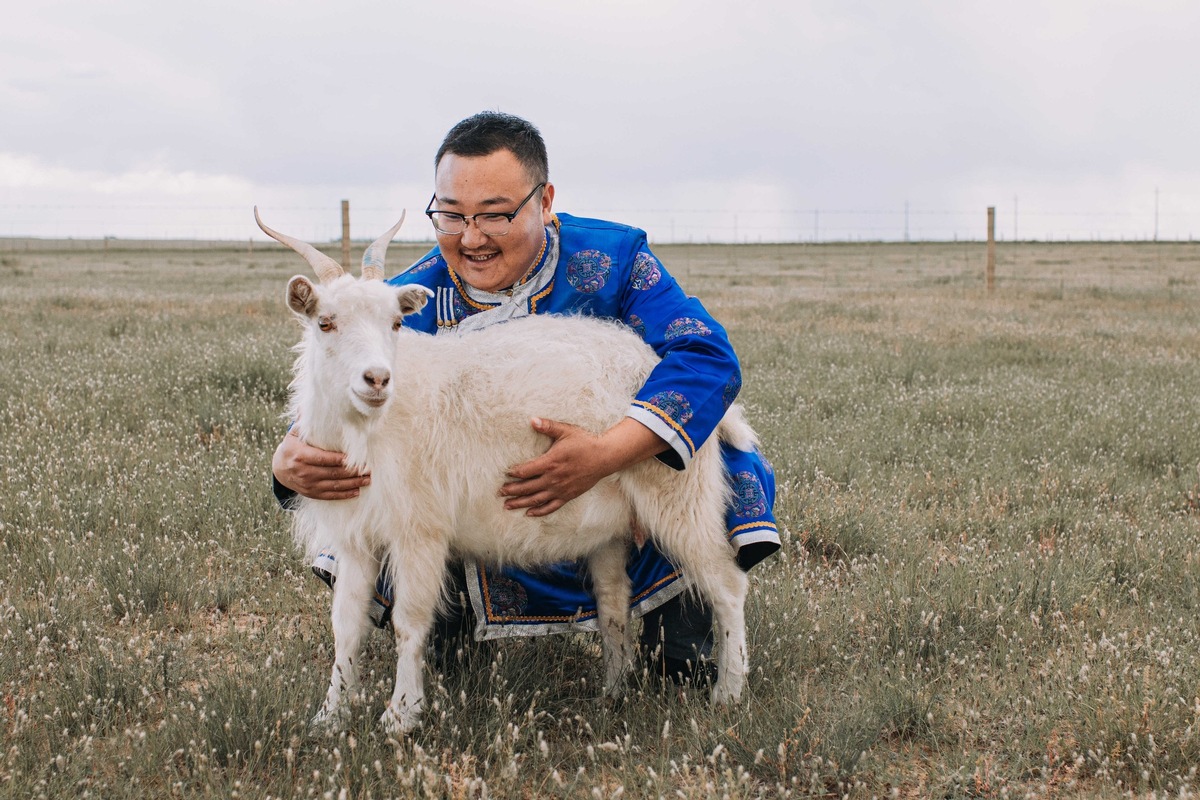
Hamburg, 2 December 2025. Through The Good Cashmere Standard® (GCS), the Aid by Trade Foundation (AbTF) has been transforming cashmere production since 2020. In addition to its commitment to animal welfare, GCS distinguishes itself by providing a complete proof of origin and by undergoing regular checks by independent auditors. Recently, GCS once again achieved excellent results in independent audits of cashmere farms and producers. They confirmed that high standards are being met for animal welfare, nature conservation, and working conditions in cashmere production. Market figures reflect similarly growing success: the share of textiles containing GCS-verified cashmere fibres increased by 30 percent between 2023 and 2024, and 6 million GCS-labelled garments were brought to market in 2024. In addition to long-term partners such as H&M, J.Crew, or The White Company, our newest partners include the companies Mango, Magasin, Marimekko, and Nordstrom.
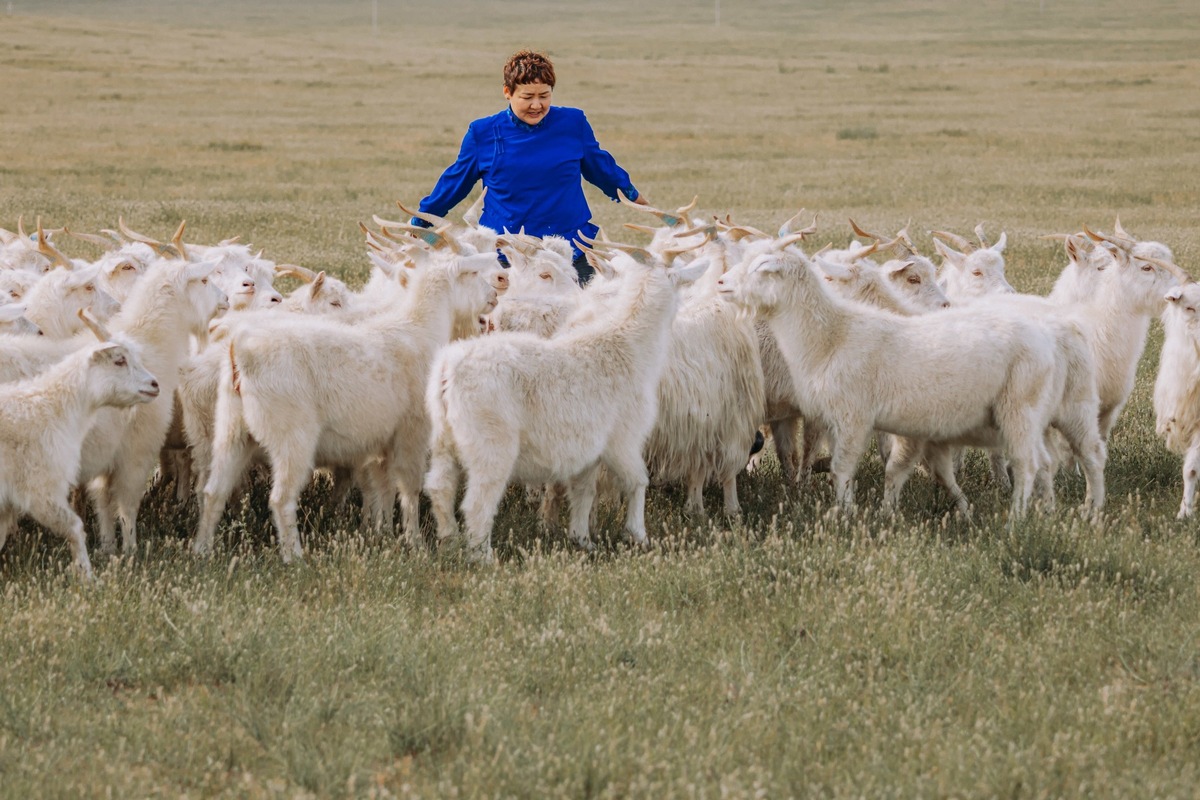
Accredited auditors regularly verify whether participating cashmere farms and producers are meeting The Good Cashmere Standard’s 150 indicators, which provide clear guidelines for keeping and shearing goats, protecting biodiversity and soil, and maintaining decent working conditions. Nearly 3,700 cashmere farms as well as twelve cashmere producers passed their verifications. They are the only ones allowed to market cashmere fibres under The Good Cashmere Standard’s certificate for the current season. Overall, the verified GCS goat farmers and cashmere producers both meet 100 percent of the core indicators; in addition, it has been independently verified that they are meeting more than 90 percent of the main and basic indicators for which AbTF expects ongoing improvement.
“For our partners and for us, this result unequivocally confirms that our close and trusting working relationship supports them in integrating the demanding requirements of The Good Cashmere Standard into their daily routines with the cashmere goats and into the further processing of the fibres. It also proves that our partners attach great importance to meeting the criteria of the GCS standard,” says Gudrun Kersten, verification manager at the Aid by Trade Foundation.
Tina Stridde, the managing director of AbTF, adds, “The sustainability standard has proven to be highly attractive for fashion brands and textile companies worldwide, thanks to the strict enforcement of our requirements and to our focus on transparency. This enables seamless traceability from the end product back to the raw material. The high demand for the verified cashmere fibres and the strong verification results confirm that the path we have chosen is the right one.”
This year’s verification requirements were demanding, with the rejection rate for farms, for instance, coming to around 30 percent. The verifications check compliance with all regulations under the standard’s four pillars: animal welfare, environmental protection, decent working conditions, and fundamental management requirements. The results reveal full compliance with social standards and environmental protection. For instance, every single farm and producer met 100 percent of requirements regarding working hours, the employee complaint mechanism, and occupational health and safety measures. When it comes to animal welfare and management, the compliance rate is 92 percent; the corresponding figure was even higher in the domain of feeding, where all regulations were complied with, reflecting an improvement of 15 percent.
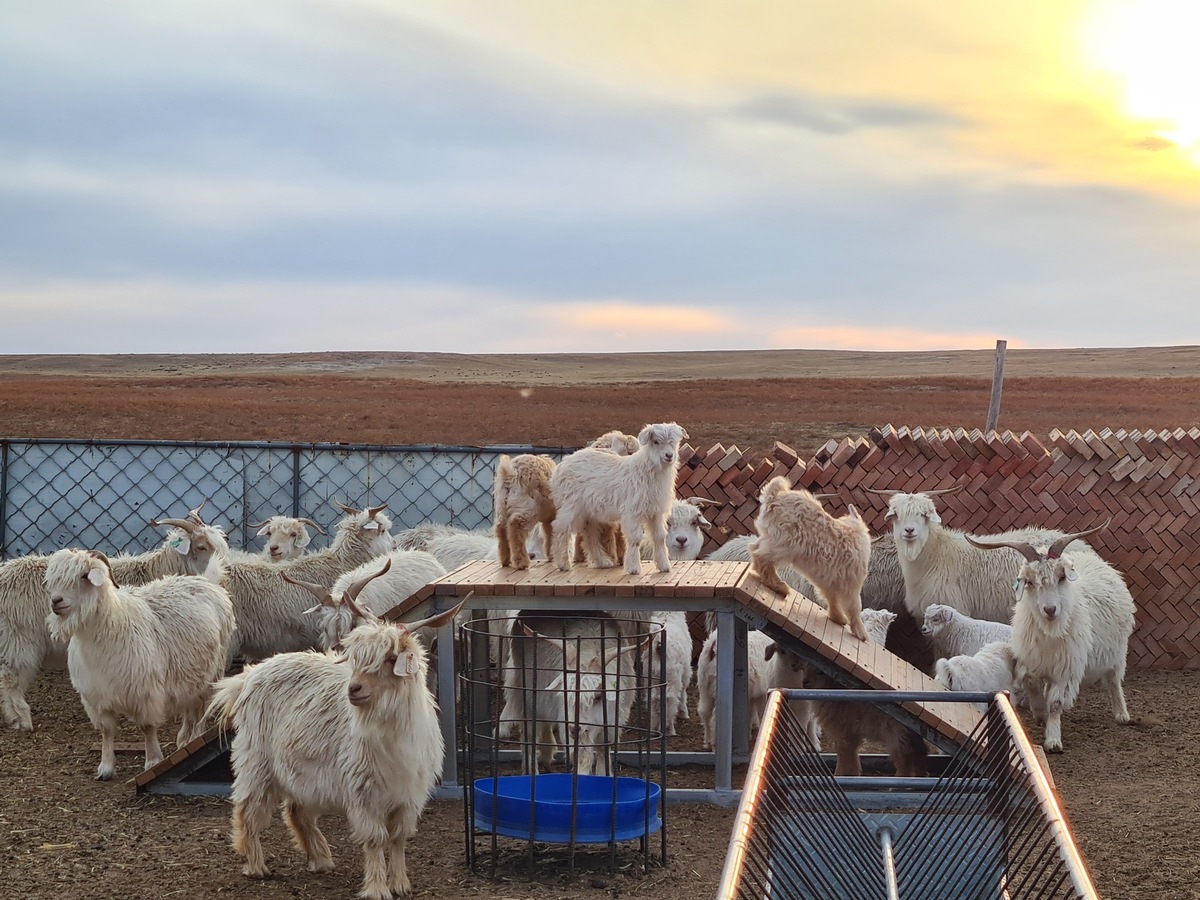
In another positive development, 88 percent of all farms are implementing the requirements for rotational grazing, thereby making an important contribution to fighting soil erosion. AbTF sees potential for improvement in how carefully documentation is completed and in how much space in the stables is available for the animals in the event of need. GCS places great weight on the animals being given sufficient space through access to pasture and to yards directly attached to the stables.
Press Contact
Christina Ben Bella, e-mail: c hristina.benbella@abt-foundation.org
Holger Diedrich, e-mail:  holger.diedrich@abt-foundation.org
Aid by Trade Foundation | Gurlittstraße 14 | 20099 Hamburg | Germany
About The Good Cashmere Standard®
Through The Good Cashmere Standard® (GCS), the Aid by Trade Foundation has been setting the benchmark for sustainable cashmere production since 2020. It has since become the biggest standard for verified sustainable cashmere fibres from Inner Mongolia. GCS criteria cover the most important aspects of cashmere production, having been developed with the aims of conserving nature and improving both the welfare of cashmere goats and the living conditions of goat farmers. In addition, GCS creates transparency in the final product by ensuring that only products provably containing verified cashmere wool can bear the label of The Good Cashmere Standard. The standard was put together with input from goat farmers as well as from industry experts and specialists in animal welfare. Learn more at: www.thegoodcashmerestandard.org
About the Aid by Trade Foundation
Founded in 2005 by the entrepreneur Prof. Dr Michael Otto, the Aid by Trade Foundation (AbTF) is now an internationally renowned non-profit organisation that works throughout the world to promote sustainable raw materials. Its activities make a decisive and measurable contribution to improving the living conditions of people and animals while protecting the environment. AbTF takes a practical approach by creating and maintaining a variety of standards to verify raw materials: Cotton made in Africa® (CmiA), Cotton made in Africa Organic (CmiA Organic), Regenerative Cotton Standard® (RCS), and The Good Cashmere Standard® (GCS). With changes in the climate and the markets increasingly posing challenges for textile companies and small-scale farmers, the standards have a fundamental role to play in ensuring their resilience and future viability. AbTF collaborates closely with industry experts and with specialists in animal protection and nature conservation. More information at: www.aidbytrade.org

.jpg.jpg)
.jpg.jpg)