

Europäischer Rechnungshof - European Court of Auditors
EU needs to step up a level on improving global nuclear safety
- Bild-Infos
- Download
Press release
Luxembourg, 4 March 2026
EU needs to step up a level on improving global nuclear safety
- EU has supported global nuclear safety for decades
- Commission lacks a comprehensive and up-to-date strategic approach
- Auditors single out shortcomings in the monitoring of the Ukraine loan
The European Commission should be more strategic in the way it supports the countries outside the EU in enhancing their nuclear safety, according to a new report by the European Court of Auditors (ECA). Despite some important achievements, it lacks a comprehensive and updated strategic approach, which reduces clarity about what goals the EU is trying to reach and hinders coordination of the financial support at its disposal. The auditors also criticise it for a lack of robust prioritisation and monitoring of EU funding, which was insufficient in several aspects.
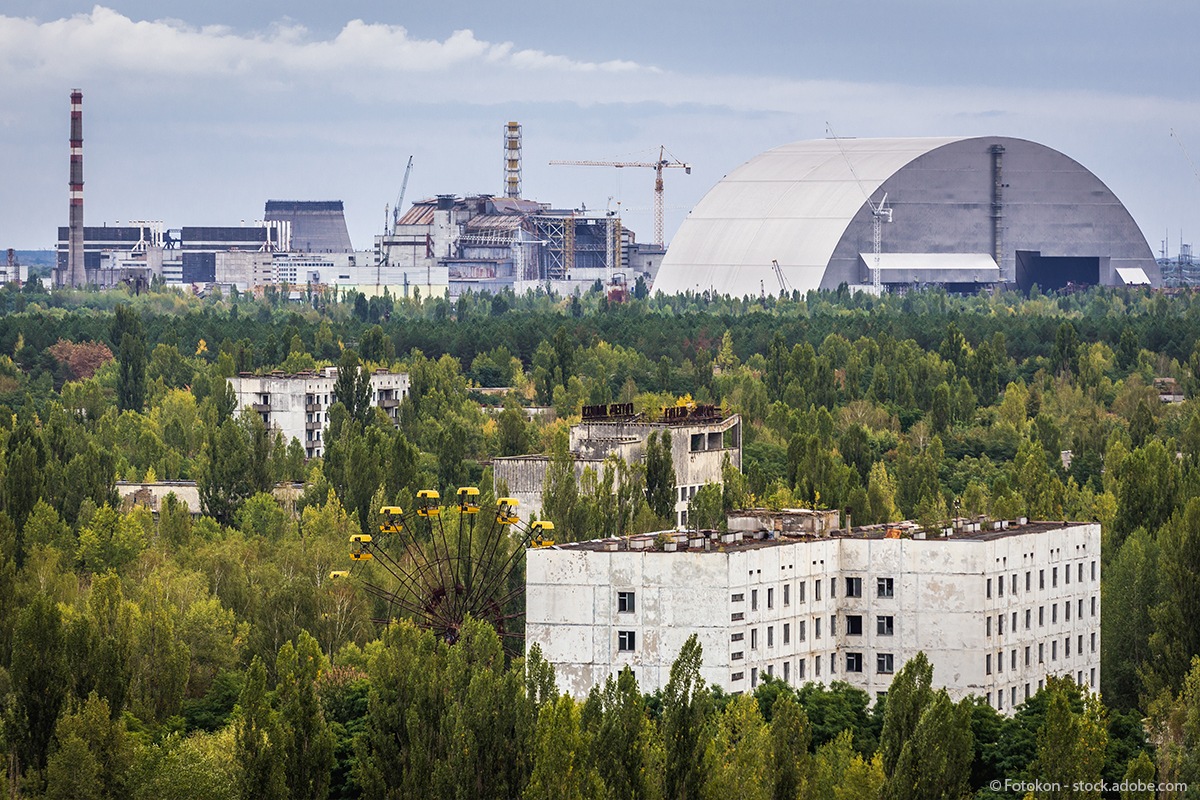
The devastating accidents in Chornobyl in 1986 and Fukushima in 2011, and Russia’s aggression against Ukraine since 2022, have heightened nuclear safety concerns around the world. However, demand for energy keeps on rising, and nuclear power is providing a growing proportion of it. The EU has historically been an active promoter of international nuclear safety cooperation. For example, it helped deliver complex, first-of-a-kind activities such as the safe confinement structure over the destroyed Chornobyl reactor 4, which was damaged as a result of Russia's war. Since 2014, the EU allocated around €600 million in grants to partner countries for training, equipment, infrastructure, expertise and remediation, and provided a €300 million loan for a safety upgrade of nuclear power plants in Ukraine.
“In nuclear safety, one thing is crystal clear: prevention is infinitely better than cure”, said Marek Opioła, the ECA Member leading the audit. “While the EU remains an important global player in nuclear safety cooperation, it should develop an all-round and up-to-date strategy to guide its cooperation and improve the selection and monitoring of EU-funded actions.”.
In an area that has evolved considerably over time and includes many players with similar objectives, the absence of such a strategy is significant. To start with, such a strategy would identify the areas of greatest value of EU action, and take account of initiatives by other stakeholders. In addition, it would clearly establish the goals the EU’s executive aims to achieve, the financial support it plans to use and the stakeholders that should be involved. As it stands, there is no strategic guidance for all tools available to the Commission, including grants and loans.
Second, the Commission should improve the process for selecting EU-funded actions. Although its activities responded to needs, the proposals from non-EU countries were not selected with due transparency, as there was no scoring or ranking. This makes it hard to guarantee that EU funding was allocated to where it could deliver the most value. For instance, evidence indicates that some actions in Central Asia and Iran, although they addressed certain specific nuclear safety risks, were driven primarily by broader geopolitical considerations.
Third, EU funded activities often experienced delays and, sometimes, cost overruns. This was particularly the case for large-scale construction and remediation works. While higher costs can partially be linked to their complexity, persistent funding gaps and lack of performance incentives also played a role, while the long-term sustainability of some activities remains at risk.
Lastly, in several aspects the Commission could have done more to supervise how the funded activities were run. A case in point is the €300 million loan to finance a large-scale programme carried out by the operator of nuclear power plants in Ukraine. The Commission chose to rely on third parties for monitoring and disbursed the loan without having assurance that the funds would exclusively finance programme-related expenses incurred and paid by the borrower.
Background information
Nuclear safety encompasses the safety of nuclear installations, of radioactive waste and of the transport of radioactive material. As of July 2025, there were 416 operational nuclear reactors in 31 countries around the world, around 40 % of which were more than 40 years old. The wide distribution of these technologies and the powerful effects of radiation if they malfunction make effective safety measures imperative.
EU action in the field of nuclear safety, including international cooperation, is based on the Treaty of the European Atomic Energy Community (Euratom Treaty). Euratom shares the same executive bodies and member states with the EU, while the majority of actions based on the Euratom Treaty are funded through the EU budget.
The EU’s grants from the Instrument for Nuclear Safety Cooperation and loans from Euratom have supported a wide range of activities, from education and training to the provision of expertise and the supply of safety-related equipment, infrastructure and remediation work. The auditors examined the design of the EU’s framework for international nuclear safety cooperation; the allocation of EU financial support between 2014 and 2024; the monitoring of what has been financed; and the results achieved by EU-funded measures to improve nuclear safety in Armenia, Iran, Kyrgyzstan, Tajikistan, Ukraine and Uzbekistan.
Special report 08/2026: “International nuclear safety cooperation: The Commission remains an important global player but lacks a comprehensive strategy and robust monitoring” is available on the ECA website, together with a one-page overview of the key facts and findings.
Contact:
ECA press office: press@eca.europa.eu