
SmartParc and GEA: transforming food production through a shared energy model
- Photo Info
- Download
- 2 additional media items
A new blueprint for sustainable food manufacturing is already delivery results at SmartParc in Derby, where food producers are not only sharing a location, but also energy. Together with GEA, the site has implemented a centralized heating and cooling system that has been successfully operating for two years, capturing and redistributing waste heat across multiple food factories. The result is a shared energy system that reduces energy consumption and costs by up to 30% and supports its progress toward net zero by 2030.
SmartParc and GEA: transforming food production through a shared energy model
Duesseldorf (Germany), May 28, 2026 – A new blueprint for sustainable food manufacturing is already delivery results at SmartParc in Derby, where food producers are not only sharing a location, but also energy. Together with GEA, the site has implemented a centralized heating and cooling system that has been successfully operating for two years, capturing and redistributing waste heat across multiple food factories. The result is a shared energy system that reduces energy consumption and costs by up to 30% and supports its progress toward net zero by 2030.
A new model for food manufacturing
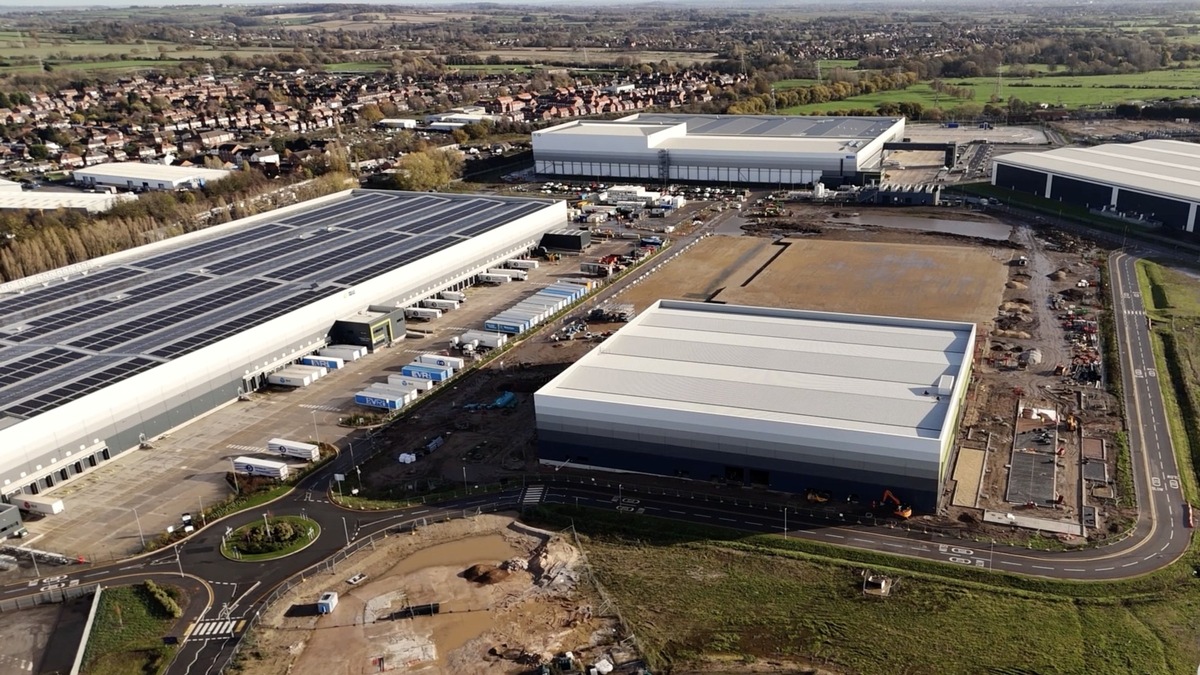
Designed as a next-generation food manufacturing park, SmartParc brings modern, purpose-built factories together on a single site, connected through shared infrastructure and a centralized energy center. Tenants benefit from both shared facilities and access to recovered energy, creating a more efficient and future-ready production environment.
Turning waste heat into valuable resource
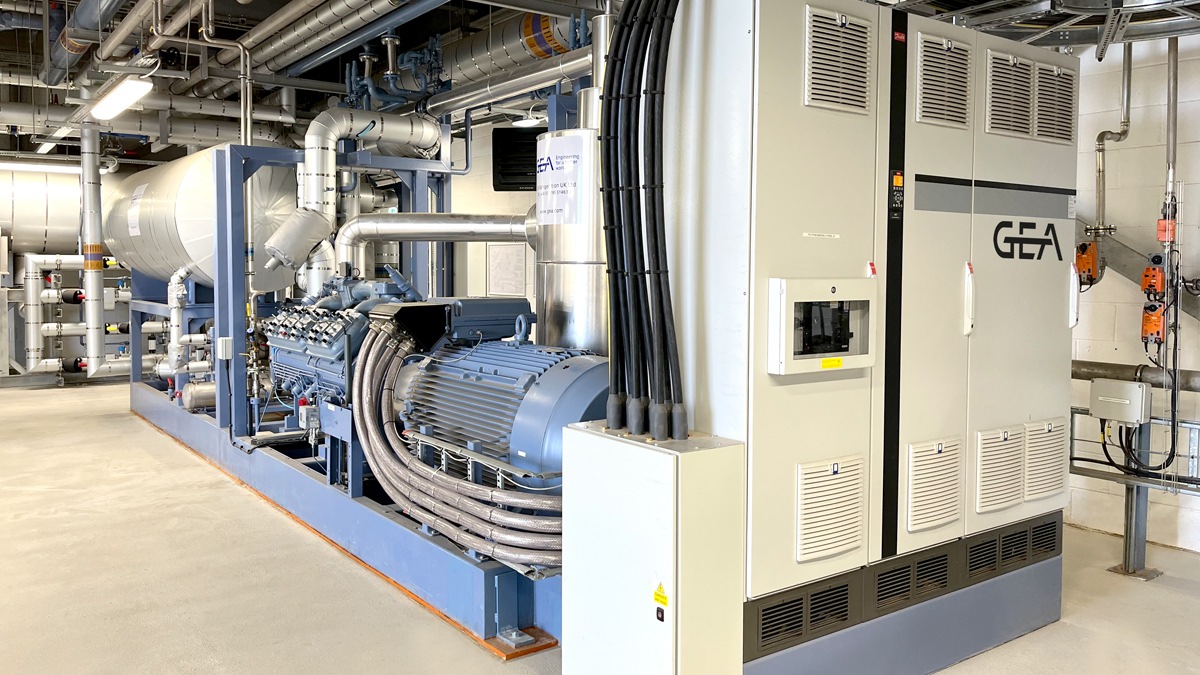
At the heart of the concept is an innovative heating and cooling system delivered in partnership with GEA. Rather than rejecting excess heat into the atmosphere, SmartParc captures it, upgrades it, and redistributes it across the park through a district heating network spanning more than 11 kilometers.
“SmartParc looked at the project as a sustainability project right from the very start,” says John Burden, Director Project Sales Heating and Refrigeration Solutions at GEA UK. “Instead of rejecting heat to the environment, we designed a system that recovers it, boosts it through an ammonia heat pump, and can redistribute it to all users in the park.”
This establishes a closed-loop energy system that captures waste heat and turns it into a valuable resource. Connected businesses can draw heating or cooling from the network as needed, regardless of whether they generated the energy themselves.
Shared infrastructure, greater performance
For Phil Lovell, COO of SmartParc Europe, this shared model is a game-changer for an industry under pressure. “Many food factories across the UK and Europe are more than 20 years old,” Lovell says. “They are tied to legacy buildings that are not efficient. By building modern facilities and managing energy centrally, we can significantly reduce costs and improve sustainability performance for our tenants.”
The park currently delivers around five megawatts of cooling and 2.5 megawatts of heating, with capacity set to more than double as new tenants move in. Crucially, the system can operate at as little as five percent of its load, ensuring efficiency even during fluctuating seasonal demand.
Perhaps the most striking outcome is that there is virtually no waste heat at all. “We don’t have any waste heat here,” says Lovell. “All the heat gets reused. For every one kilowatt of electricity we use, we generate three kilowatts of cooling and four of heating. That’s the whole point of the system.”
Ammonia, natural choice for high efficiency
A key element of the system is the use of ammonia as a natural refrigerant. Unlike synthetic refrigerants, ammonia is environmentally friendly and highly efficient. “Ammonia has excellent thermodynamic properties,” Burden explains. “It allows us to provide both cooling and heating using significantly less energy compared to conventional systems. That supports SmartParc’s net-zero ambitions directly.”
Proven in practice, scalable for the future
The energy center has now been operating successfully for two years, delivering lower energy costs, reduced emissions, and measurable ESG benefits for tenants. For GEA, the project demonstrates how advanced heat pump technology and integrated engineering can enable systemic change at scale.
As the food industry faces mounting pressure to decarbonize while remaining competitive, SmartParc offers a practical, proven model: collaboration over isolation, shared infrastructure over duplication, and engineering designed to make better use of resources.
In Derby, the future of sustainable food manufacturing is not theoretical, it is already up and running.
Read more about this project at: https://www.gea.com/en/stories/smartparc-gea-shared-energy-food-production/
NOTES TO THE EDITOR
- More information about GEA
- To the GEA Media Center
- Follow GEA on LinkedIn, Youtube
Contact Media Relations
GEA Group Aktiengesellschaft
Michael Golek
Ulmenstr. 99, 40476 Düsseldorf, Germany
Phone +49 211 9136-1505
 michael.golek@gea.com
About GEA
GEA is one of the world’s largest suppliers of systems and components to the food, beverage and pharmaceutical industries. The international technology group, founded in 1881, focuses on machinery and plants, as well as advanced process technology, components and comprehensive services. For instance, every second pharma separator for essential healthcare products such as vaccines or novel biopharmaceuticals is produced by GEA. In food, every fourth package of pasta or every third chicken nugget are processed with GEA technology.
With more than 18,000 employees, the group generated revenues of about EUR 5.5 billion in more than 150 countries in fiscal year 2025. GEA plants, processes, components and services enhance the efficiency and sustainability of customers’ production. They contribute significantly to the reduction of CO2 emissions, plastic usage and food waste. In doing so, GEA makes a key contribution toward a sustainable future, in line with the company’s purpose: ”Engineering for a better world.”
GEA is listed on the DAX, the STOXX® Europe 600 Index and is also a constituent of the leading sustainability indices DAX 50 ESG, MSCI Global Sustainability and Dow Jones Best-in-Class World.
More information can be found online at gea.com.
If you do not want to receive any further information from GEA, please send an e-mail to pr@gea.com.
About the GEA Foundation
The GEA Foundation, established in 2025 by GEA Group, supports global and local projects in STEM education, child poverty reduction, infrastructure access and disaster relief. Through its Mission 30 strategy, GEA commits to donating one percent of annual net profit to build resilient communities.
More information can be found online at gea.com/foundation.
Further material to download

document:  2026.05.28_GEA-SmartParc-e.docx

document:  2026.05.28_GEA-SmartParc-d.docx