

GEA: CO₂ capture for waste-to-energy plants
- Photo Info
- Download
Waste-to-energy plant operators receive expert support in their decarbonization efforts from solutions provider GEA. Building on decades of experience in flue gas cleaning, heat recovery, and process integration, GEA offers a comprehensive portfolio of CO₂ capture solutions designed to help waste-to-energy plants significantly reduce their carbon footprint while ensuring high plant availability and operational reliability. By combining waste-to-energy with CO₂ capture, operators can go beyond emissions reduction and strive for climate-positive solutions—especially when biogenic CO₂ fractions are captured and utilized or stored. GEA’s technologies help unlock this potential and contribute to circular, low-carbon value chains.
GEA: CO ₂ capture for waste-to-energy plants
Duesseldorf (Gerrmany), May 5, 2026 – Waste-to-energy plant operators receive expert support in their decarbonization efforts from solutions provider GEA. Building on decades of experience in flue gas cleaning, heat recovery, and process integration, GEA offers a comprehensive portfolio of CO₂ capture solutions designed to help waste-to-energy plants significantly reduce their carbon footprint while ensuring high plant availability and operational reliability. By combining waste-to-energy with CO₂ capture, operators can go beyond emissions reduction and strive for climate-positive solutions—especially when biogenic CO₂ fractions are captured and utilized or stored. GEA’s technologies help unlock this potential and contribute to circular, low-carbon value chains.
GEA Solutions for the challenges of waste-to-energy plants
Flue gases from waste-to-energy plants are characterized by variable compositions, impurities, and fluctuating operating conditions. GEA’s CO₂ capture solutions are therefore designed as fully integrated systems that combine proven flue gas pretreatment, energy-efficient CO₂ capture, and advanced heat recovery concepts. By utilizing process waste heat, GEA significantly reduces the energy required for solvent regeneration. This approach helps waste-to-energy plant operators minimize operating costs while achieving high CO₂ capture rates.
CO ₂ capture proven under real-world conditions in waste-to-energy
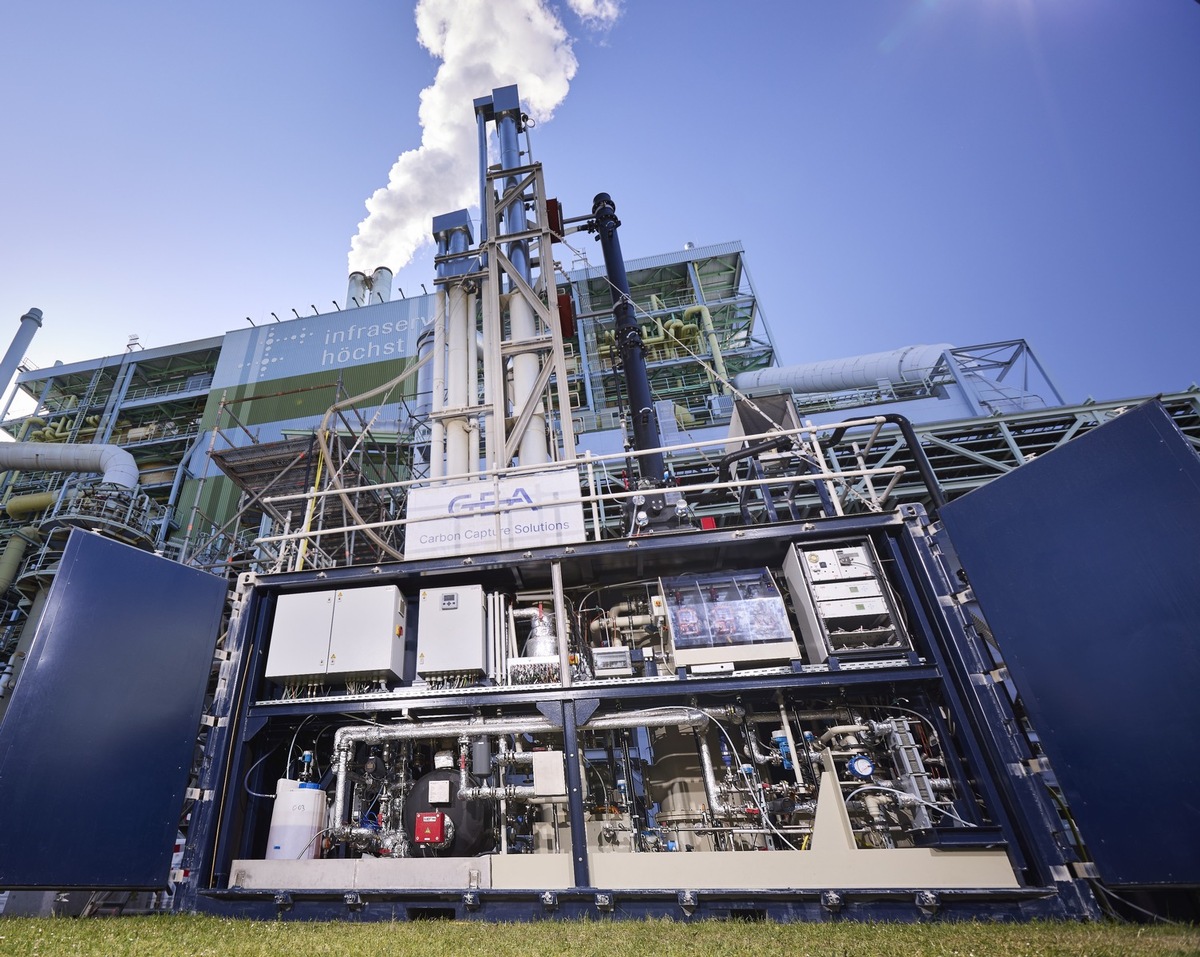
GEA’s CO₂ capture technologies have been validated under real-world industrial conditions typical of waste-to-energy applications. Pilot plants connected to thermal treatment facilities have demonstrated stable operation with complex flue gases from sewage sludge incineration as well as the combustion of alternative fuels. These projects provide valuable insights into energy consumption, capture efficiency, and long-term process stability—key factors for industrial-scale deployment in waste-to-energy plants. GEA’s mobile pilot plant was recently deployed at a waste-to-energy site in Belgium, enabling further optimization of the technology under representative operating conditions. In addition, recent feasibility studies and pilot campaigns have addressed applications ranging from waste-derived fuels to integrated waste-to-energy environments, underscoring the flexibility of GEA’s solutions.
From pilot project to industrial-scale implementation
GEA supports customers in the waste-to-energy industry throughout the entire project lifecycle—from feasibility studies and early-stage pilot trials to the planning and delivery of industrial-scale plants. Current project activities across Europe reflect the strong and growing interest among waste-to-energy plant operators in utilizing CO₂ capture as a key technology to meet increasingly stringent climate targets and regulatory requirements. With scalable plant concepts and a modular portfolio, GEA enables a low-risk entry into CO₂ -capture and supports operators in future-proofing their plants.
Felix Ortloff (GEA): Operators significantly reduce their carbon footprint while continuing to reliably supply communities with energy
“Energy generation from waste plays a crucial role in sustainable waste management and energy supply. With our CO₂ capture solutions, we enable operators to significantly reduce their carbon footprint while continuing to reliably supply communities with energy,” says Dr. Felix Ortloff, Senior Director in GEA’s Carbon Capture Solutions team.
NOTES TO THE EDITOR
- More information about GEA
- To the GEA Media Center
- Follow GEA on LinkedIn, Youtube
Contact Media Relations
GEA Group Aktiengesellschaft
Michael Golek
Ulmenstr. 99, 40476 Düsseldorf, Germany
Phone +49 211 9136-1505
 michael.golek@gea.com
About GEA
GEA is one of the world’s largest suppliers of systems and components to the food, beverage and pharmaceutical industries. The international technology group, founded in 1881, focuses on machinery and plants, as well as advanced process technology, components and comprehensive services. For instance, every second pharma separator for essential healthcare products such as vaccines or novel biopharmaceuticals is produced by GEA. In food, every fourth package of pasta or every third chicken nugget are processed with GEA technology.
With more than 18,000 employees, the group generated revenues of about EUR 5.5 billion in more than 150 countries in fiscal year 2025. GEA plants, processes, components and services enhance the efficiency and sustainability of customers’ production. They contribute significantly to the reduction of CO2 emissions, plastic usage and food waste. In doing so, GEA makes a key contribution toward a sustainable future, in line with the company’s purpose: ”Engineering for a better world.”
GEA is listed on the DAX, the STOXX® Europe 600 Index and is also a constituent of the leading sustainability indices DAX 50 ESG, MSCI Global Sustainability and Dow Jones Best-in-Class World.
More information can be found online at gea.com.
If you do not want to receive any further information from GEA, please send an e-mail to pr@gea.com.
About the GEA Foundation
The GEA Foundation, established in 2025 by GEA Group, supports global and local projects in STEM education, child poverty reduction, infrastructure access and disaster relief. Through its Mission 30 strategy, GEA commits to donating one percent of annual net profit to build resilient communities.
More information can be found online at gea.com/foundation.
Further material to download

document:  2026.05.05_GEA-IFAT-~rbon Capture-e.docx

document:  2026.05.05_GEA-IFAT-~rbon Capture-d.docx