
GEA consolidates technology center for industrial biotechnology in Sarstedt, Germany
- Photo Info
- Download
- 2 additional media items
One document
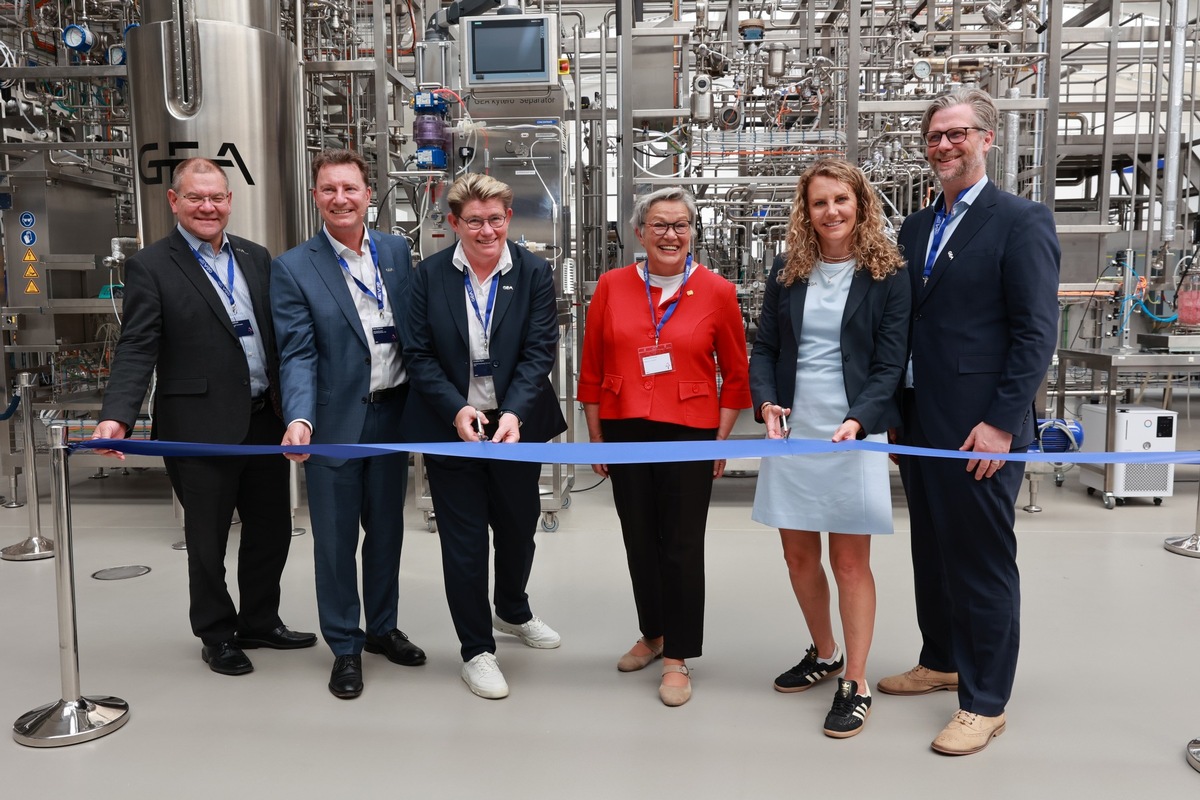
GEA has relocated its biotech pilot center to Sarstedt, Germany, backing the EUR 4 million move with three years of operating experience from Hildesheim. At the new Application and Technology Center, companies test whether precision fermentation and cell cultivation processes can scale from lab to industrial production before committing capital to a plant. At the opening event there were impulses from Sarstedt Mayor Heike Brennecke, GEA's member of the Executive Board Klaus Stojentin, New Food lead Frederieke Reiners and partners BFF (Netherlands) and Solar Foods (Finland). Opening images are available for download.
Scaling new food and biotech in Germany
GEA consolidates technology center for industrial biotechnology in Sarstedt, Germany
- GEA is investing EUR 4 million to build out a new Application and Technology Center in Sarstedt, Germany, building on three years of experience in Hildesheim.
- The center helps companies move biotechnological processes from the laboratory into practical pilot-scale operation.
- Around 240 employees will work at GEA’s Sarstedt engineering site following the ATC relocation.
- Focus areas include precision fermentation, cell cultivation and other biomanufacturing processes.
- Biotechnological processes can produce proteins that can serve as alternatives to fish, meat and dairy proteins, as well as functional ingredients such as enzymes, amino acids, vitamins and flavors.
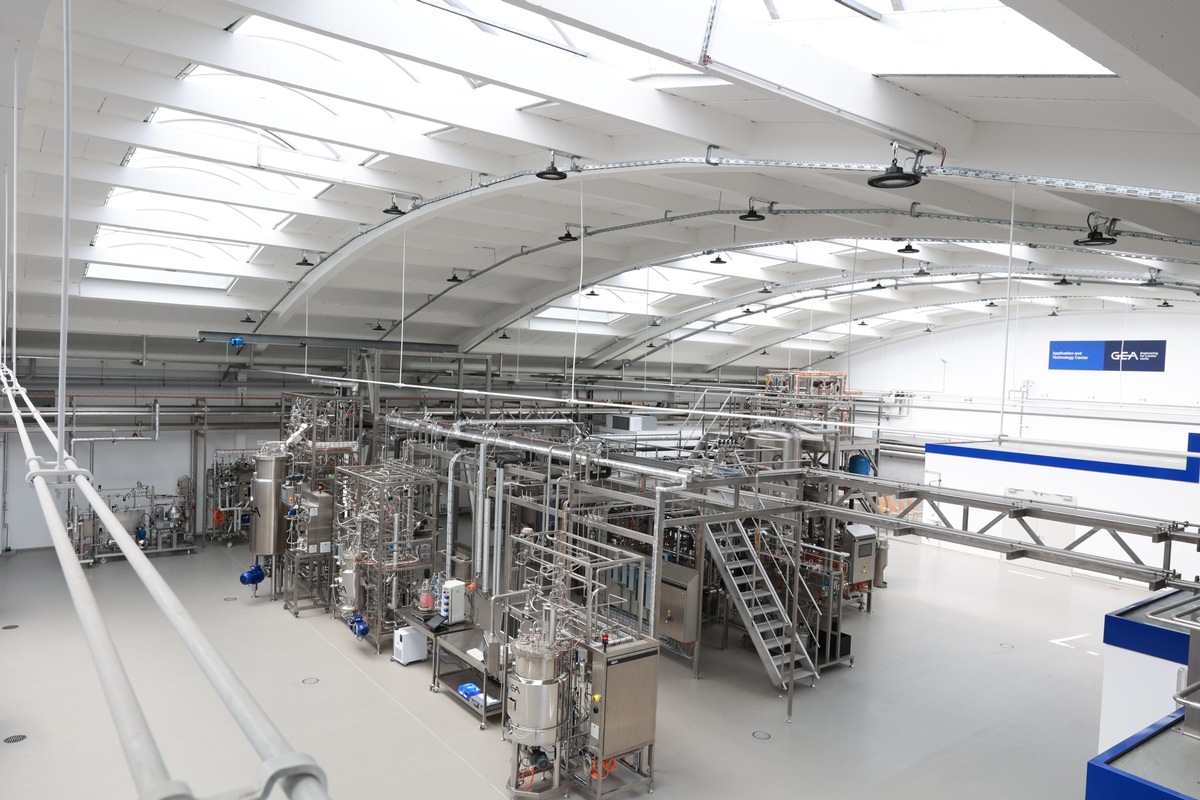
Düsseldorf (Germany), July 2, 2026 – GEA has relocated its Application and Technology Center (ATC) for New Food and Biotechnology from Hildesheim to Sarstedt, Lower Saxony, Germany. The center has been in operation since 2023; three years of pilot projects and customer work feed directly into its continued work in Sarstedt. It helps companies in the food, ingredients and biotechnology sectors develop and test pilot-scale production processes for precision fermentation, cell cultivation and other biomanufacturing applications.
GEA invested EUR 4 million to convert and equip an existing building at the Sarstedt site where process expertise in beverages, liquid dairy and New Food has grown over several decades. About 200 employees work there in engineering, sales, automation and service. The ATC brings around 40 more colleagues to the team.
Locating the ATC in Sarstedt puts New Food and biotechnology activities directly alongside established engineering and process capabilities. Customers can draw on the same GEA teams from early pilot trials through to full industrial plant design.
“This this new technology center strengthens Sarstedt as a place for engineering, technology and skilled jobs,” said Heike Brennecke, mayor of the city of Sarstedt. “It sends a clear signal that biotechnology is being developed here and put to work.”
“New Food and biotechnology need places where you can find out whether a promising process can actually become a viable industrial application,” said Klaus Stojentin, CEO of GEA’s Nutrition Plant Engineering Division. “In Sarstedt, we bring pilot infrastructure and engineering expertise under one roof. That gives our customers a stronger basis for their next decision.”
From lab results to sound investment decisions
Moving from the lab to industrial production is one of the toughest stages in biotech process development. An organism may produce a target product in the lab. A cell line may grow. A first prototype may look convincing. Whether any of that translates into an economically viable process only becomes clear when the work moves into larger, more integrated process steps.
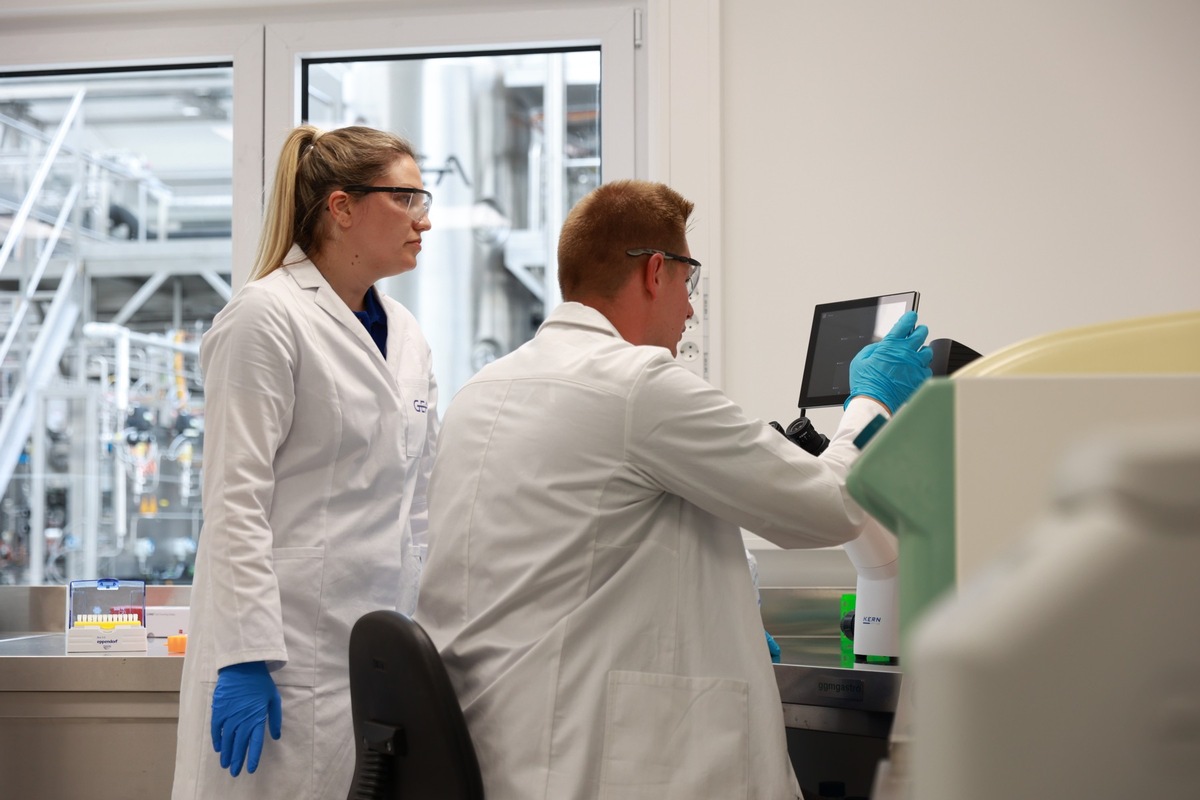
At the ATC, companies can assess these questions early: Can the process be run consistently? What product quality does the target application require? To answer those questions, GEA connects bioreactors from 50 to 500 liters with upstream and downstream steps including media preparation, separation, filtration, hygienic process design and automation. The result is a more solid basis for the next decision, whether that means food-grade piloting, partnering with a contract manufacturer or planning an industrial plant.
“A good lab result creates interest. A solid process creates confidence. And sometimes the most valuable outcome of a test run is a clear no – because a process isn't stable enough yet, or the cost structure simply doesn't hold up. Learning that early can save a company a lot of time and capital.” – Frederieke Reiners, Vice President New Food & Biotech, GEA
Biotechnology applications extend well beyond New Food
Precision fermentation and cell cultivation get most of their public attention in the context of alternative proteins. Their applications extend well beyond that. Biotechnological processes can produce proteins, enzymes, amino acids, vitamins, flavors and other functional ingredients for food, feed and healthcare. Many of the underlying process steps are similar. But the right design depends on the organism, the product and the target application.
The New Food sector is moving more slowly than many early forecasts suggested. Financing, regulation, production costs and scale-up all influence how quickly new processes reach the market. For GEA, the core question is whether biotech processes can move safely, reliably and economically from the lab into industrial use.
The goal is not to replace conventional food production or agriculture. New biotech processes can open additional production pathways for specific ingredients, particularly where climate risks, animal health pressures, raw material shortages or fragile supply chains put existing systems under strain.
Connecting research to industrial application
Germany has strong capabilities in science, mechanical engineering, process industries and food production. Translating that into industrial-scale biotechnology requires these strengths to work together more closely. Research and financing matter. So does pilot infrastructure where companies can test technical and commercial assumptions before committing capital to larger assets.
Germany's federal government has recently identified precision fermentation and industrial biotechnology as priority future technologies. For GEA, what matters is whether that translates into concrete industrial structures: pilot facilities, predictable regulatory processes and partners across the full value chain.
The ATC in Sarstedt is one contribution to that ecosystem. It connects initial lab results with the question of whether a process can perform reliably at larger scale and justify the next investment decision.
At the opening, representatives from industry and biotechnology explored how Europe can build stronger scale-up pathways. Among the partners represented were the Biotechnology Fermentation Factory (BFF) in Ede, Netherlands, which is building open-access food-grade pilot capacity on the NIZO Food Innovation Campus, and Solar Foods in Finland, which is producing its fermentation-based protein Solein at industrial demonstration scale.
Profile: GEA Application and Technology Center Sarstedt
- Function: Pilot infrastructure for biotechnological production processes
- Background: In operation in Hildesheim since 2023; relocated to Sarstedt in 2026
- Investment: EUR 4 million in renovation and equipment
- Focus areas: Precision fermentation, cell cultivation and other biomanufacturing processes
- Bioreactors: 50 to 500 liters
- Process steps: Media preparation, fermentation, separation, filtration, hygienic process design and automation
- Target users: Companies in biotechnology, biomanufacturing, food and ingredients
- Objective: Test technical and commercial assumptions early, before capital is committed to the next production stage
Profile: GEA Liquid Technologies GmbH, Sarstedt
- Location: Sarstedt, Lower Saxony, Germany Employees: Around 240 following the ATC’s relocation Functions: Engineering, sales, automation, procurement, finance, service and assembly Focus areas: Engineering and technology development for non-alcoholic beverages, liquid dairy processing in the DACH region, New Food and biotechnology Role of the site: Development, planning and support of customized process solutions for the food and beverage industries
- Production: No manufacturing takes place at the Sarstedt site; equipment and components are manufactured at other GEA sites
- Community involvement:
- EXPLORE Sciencenter Hildesheim (promotion of STEM education): EUR 15,000
- German Children’s Cancer Foundation, Bonn: EUR 5,000
- Freie und Jungendhilfe e. V., Mölln: EUR 5,000
NOTES TO THE EDITOR
- More information about GEA
- To the GEA Media Center
- Follow GEA on LinkedIn, Youtube
Contact Media Relations
GEA Group Aktiengesellschaft
Fanny Förster
Ulmenstr. 99, 40476 Düsseldorf, Germany
Phone +49 211 9136-1504
 fanny.foerster @gea.com
About GEA
GEA is one of the world’s largest suppliers of systems and components to the food, beverage and pharmaceutical industries. The international technology group, founded in 1881, focuses on machinery and plants, as well as advanced process technology, components and comprehensive services. For instance, every second pharma separator for essential healthcare products such as vaccines or novel biopharmaceuticals is produced by GEA. In food, every fourth package of pasta or every third chicken nugget are processed with GEA technology.
With more than 18,000 employees, the group generated revenues of about EUR 5.5 billion in more than 150 countries in fiscal year 2025. GEA plants, processes, components and services enhance the efficiency and sustainability of customers’ production. They contribute significantly to the reduction of CO2 emissions, plastic usage and food waste. In doing so, GEA makes a key contribution toward a sustainable future, in line with the company’s purpose: ”Engineering for a better world.”
GEA is listed on the DAX, the STOXX® Europe 600 Index and is also a constituent of the leading sustainability indices DAX 50 ESG, MSCI Global Sustainability and Dow Jones Best-in-Class World.
More information can be found online at gea.com.
If you do not want to receive any further information from GEA, please send an e-mail to pr@gea.com.
About the GEA Foundation
The GEA Foundation, established in 2025 by GEA Group, supports global and local projects in STEM education, child poverty reduction, infrastructure access and disaster relief. Through its Mission 30 strategy, GEA commits to donating one percent of annual net profit to build resilient communities.
More information can be found online at gea.com/foundation.