
New Scattered Light Method enables faster Analysis of Bacteria and Antibiotic Resistance
- Photo Info
- Download
- 2 additional media items
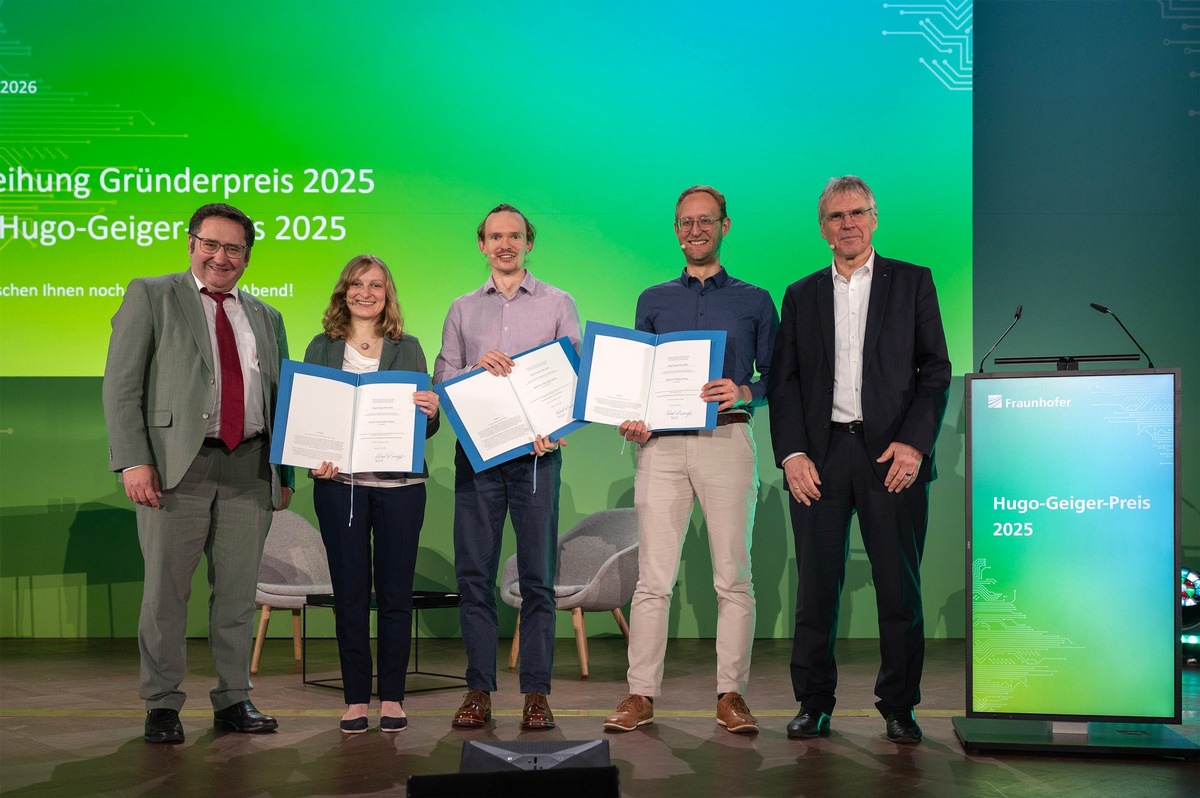
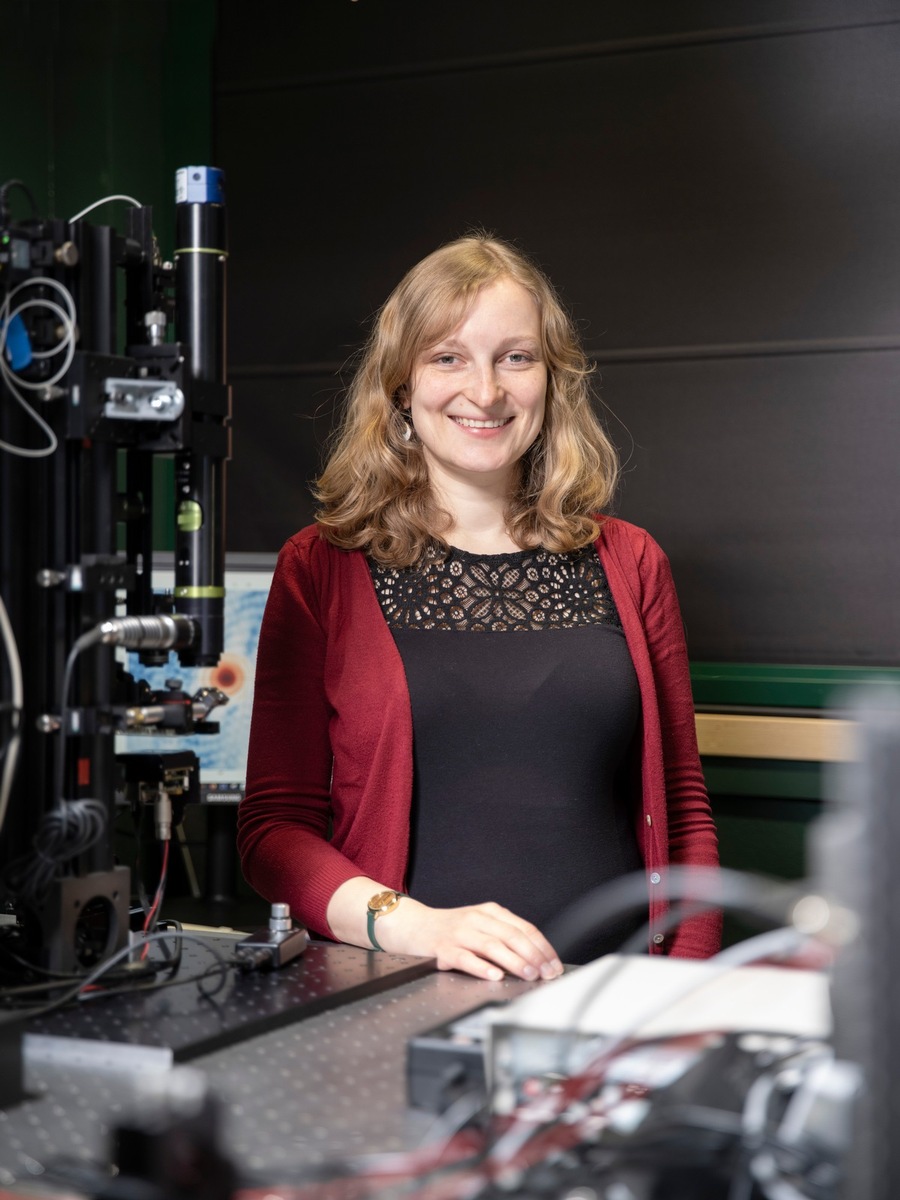
Dr. Anne-Sophie Munser has been awarded third place in the Hugo Geiger Prize. She was recognized for her development of a highly sensitive light scattering measurement method that allows microorganisms, bacteria, and antibiotic resistance to be analyzed significantly faster than with conventional methods. The technology opens up promising prospects, including infection research. The prize was awarded on March 18 during the Fraunhofer Symposium “Netzwert” in Munich.
Time is a critical factor in treating bacterial infections. While pathogens multiply rapidly, their identification in conventional diagnostics often takes several hours or even days. This is particularly problematic with antibiotic-resistant pathogens. Using a photonics-based measurement method, Dr. Anne-Sophie Munser has developed a procedure that can significantly accelerate this process in the future.
For her dissertation, the researcher from the “Functional Surfaces and Coatings” department at the Fraunhofer Institute for Applied Optics and Precision Engineering IOF adapted a method from optical metrology for use in cell biology. For this work, she was awarded third place in the prestigious Hugo Geiger Prize at the Fraunhofer Symposium “Netzwert” on March 18 in Munich. Anne-Sophie Munser had already received the Dr.-Ing. Siegfried Werth Prize for her research in 2024.
Detecting individual cells in fractions of a second
Her method utilizes what is known as angle-resolved light scattering analysis. This is a method traditionally used to visualize the finest defects or particles on exceptionally smooth surfaces, such as mirrors or lenses. Anne-Sophie Munser leveraged this high sensitivity to detect individual microorganisms rather than nanostructures.
The result is a method that can detect even a few cells of harmful bacteria without the need for prior time-consuming cultivation. Conventional methods usually require large quantities of cells and, consequently, time: “Instead of waiting for colonies of thousands of cells, microfluidic sample handling allows us to analyze microbiological processes as early as the first two to three cell divisions,” explains the researcher. With the new technology, individual cells can be detected in fractions of a second. Bacteria and their potential resistances can thus be identified within about three hours.
Analyzing bacterial properties down to the nanometer scale
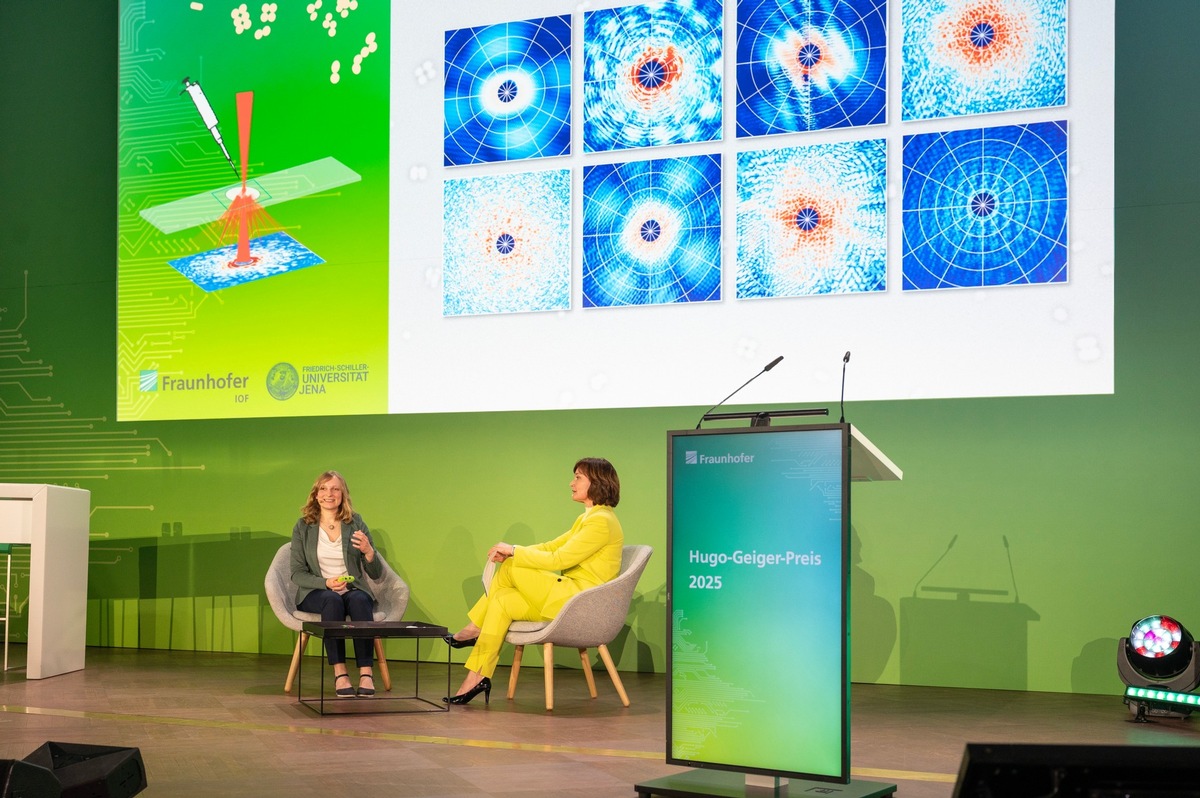
For detection, a laser beam is directed at individual cells. Depending on their structure, surface properties, and shape, the cells scatter the light in different directions. This creates a characteristic light distribution from which conclusions can be drawn about cell type, surface roughness, aggregation behavior, and other structural properties down to the nanometer scale. “You could say that every cell leaves behind a kind of optical fingerprint through the scattering of light. We use this to analyze microorganisms quickly and precisely,” explains the researcher.
In her doctoral thesis, Dr. Anne-Sophie Munser was able to demonstrate that light scattering technology can also be used to determine the effectiveness of antibiotics against various bacteria within just a few hours. This is a clear advantage for faster, targeted treatment.
Further Development into a Lab-on-a-Chip System
In addition, the researcher developed her own data analysis methods to better interpret the novel light scattering patterns for biological applications. Her team is currently working in interdisciplinary cooperation to further simplify this analysis with artificial intelligence. The system is also being refined technically: the current device is still about the size of two shoeboxes. The long-term goal is to develop it into a compact, portable system, eventually leading to integrated lab-on-a-chip solutions.
Interdisciplinary Application
The speed with which the method can analyze thousands of samples in a very short time makes the technology particularly interesting for use in laboratories, clinics, and drug discovery. Thanks to close interdisciplinary collaboration among experts in photonics, microbiology, and infection biology, the light scattering technique is already being used by a research institute in drug discovery and infection diagnostics.
Light scattering analysis is also suitable for applications in food inspection or monitoring drinking water quality. Such light scattering sensors may also play a role in the future in stem cell differentiation or in the study of biofilms, for example on implants or in the dental field.
About the Hugo Geiger Prize
The Hugo Geiger Prize is jointly awarded by the Bavarian Ministry of Economic Affairs, Regional Development, and Energy (StMWi) and the Fraunhofer Gesellschaft to recognize innovative solutions developed by doctoral candidates in close cooperation with a Fraunhofer Institute. Submissions are evaluated by a jury comprising representatives from research and industry. The evaluation criteria include scientific quality, economic relevance, novelty, and the interdisciplinary nature of the approaches. The award was presented to the winners on March 18 by Bavarian State Secretary for Economic Affairs Tobias Gotthardt during the Fraunhofer Symposium “Netzwert”.
Sina Seidenstücker
Press & Public Relations
Fraunhofer Institute for Applied Optics and Precision Engineering IOF
Albert-Einstein-Strasse 7, 07745 Jena, Germany
phone:  +49 3641 807 – 803
 http://www.iof.fraunhofer.de
Hier können Sie sich abmelden.