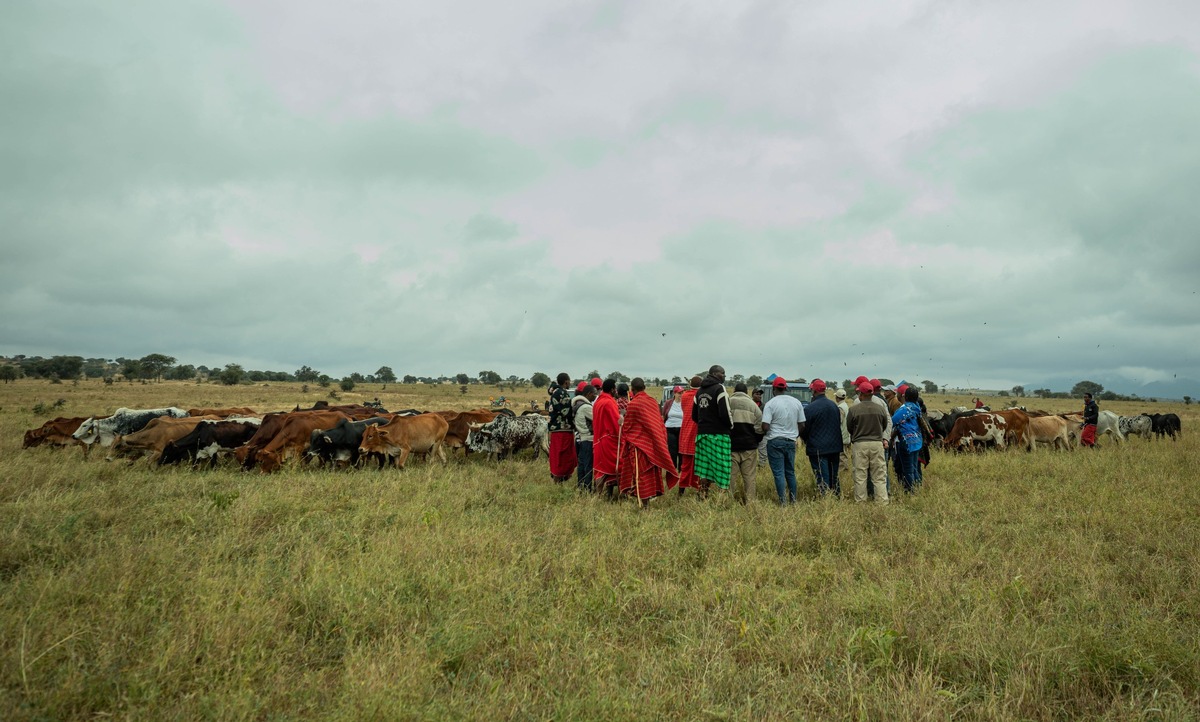

Climate and Agriculture: How Cotton made in Africa and African People & Wildlife Focus on Farmer Participation & Dialogue
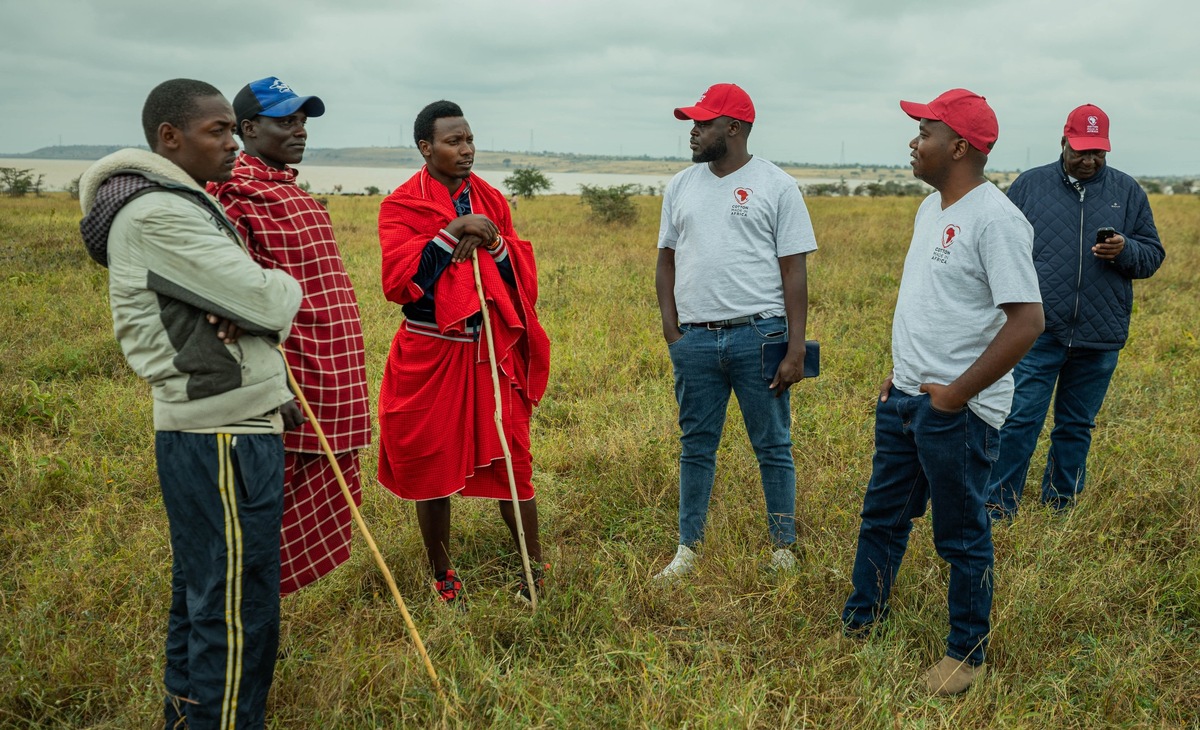
- Photo Info
- Download
- 6 additional media items
One document
Climate and Agriculture: How Cotton made in Africa and African People & Wildlife Focus on Farmer Participation & Dialogue
A new manual created by the Aid by Trade Foundation and African People & Wildlife shows how Cotton made in Africa aims to transform cotton cultivation through dialogue rather than directives.
Hamburg, 14 September 2026. Due to droughts and species extinction caused by climate change and biodiversity loss, agriculture is being forced to adapt rapidly. This is an especially great challenge for small-scale farmers in Africa South of the Sahara. Training can make a difference, but simply issuing instructions from above often fails to produce impact. In close cooperation with African People & Wildlife (APW), a community-based nature conservation organisation with 20 years of experience, the Hamburg-based Aid by Trade Foundation (AbTF) has published a pioneering manual: the CmiA Community Engagement Training Manual. In this manual, the two partners introduce a new approach to agricultural consulting and to establishing a partnership-based dialogue on an equal footing with small-scale cotton farmers.
Designed as a practical guide, the new training manual moves beyond the top–down paradigm that often characterises traditional agricultural consulting. It was developed by both organisations in collaboration over several years, building on APW’s tried and tested ACTIVE Community Engagement Model. Divided into four modules, the manual covers topics ranging from socio-cultural planning to the holding of participatory sessions and the evaluation of learning success.
Complex Challenges Call for New Paths
This manual places cotton producers at the heart of a process that involves collaborative learning, communication, and decision-making. Through this process, agricultural advisors and lead farmers develop into 'community champions' (moderators of change). Their main focus is on engaging farming communities in a dialogue-driven process to bring about lasting positive changes in traditional farming practices.
The reason for this is that climate change, biodiversity loss, and their impact on rural communities require extensive adjustments to be made to cotton cultivation. In order to implement these adjustments, it is not sufficient to give purely technical recommendations for action and to verify their implementation; rather, it is necessary to take into account local knowledge, traditional practices, and farmers’ individual risk perceptions. The manual provides facilitators in the growing regions with a guide to analysing local needs collaboratively, helping them identify what adjustments smallholder farming truly requires in each context. This approach will lead to a greater acceptance of innovative cultivation methods, to joint action, and to the development of a deeper understanding of the need for change.
Communities at the Center of Action
“The manual reflects our conviction that agriculture can only function in the long term if rural communities are the focus of action,” says Alexandra Perschau, the head of cotton standards at the Aid by Trade Foundation, continuing, “Farmers are not passive recipients of recommendations for action; they are equal partners as the pivotal point of change. Their valuable experience and the rich, traditional knowledge of many people and communities form the basis of the new approach.”
Currently, the handbook is being introduced to CmiA implementation partners through an initial 'Training of Trainers' and CmiA regional workshops led by APW. Key contributors to this effort include Alais Morindat, the head of the ACTIVE Community Engagement programme at APW; Revocatus Magyane, the ACTIVE programme director and the senior programme officer of APW; and Dr Ben Sekamatte, an agricultural expert and consultant for CmiA from Uganda.
Press Contact
Christina Ben Bella, e-mail:  christina.benbella@abt-foundation.org
Holger Diedrich, e-mail:  holger.diedrich@abt-foundation.org
 Aid by Trade Foundation | Werner-Otto-Straße 13 b | 22197 Hamburg | Germany
Press Contact African People & Wildlife
Katy Teson, e-mail:  kteson@africanpeoplewildlife.org
About the Aid by Trade Foundation
The Aid by Trade Foundation (AbTF), founded in 2005 by the entrepreneur Prof. Dr. Michael Otto, is an internationally active non-profit organization. Through its raw material standards Cotton made in Africa® (CmiA), Cotton made in Africa Organic (CmiA Organic), Regenerative Cotton Standard® (RCS), and The Good Cashmere Standard® (GCS), independent third parties verify compliance with environmental, social, and animal welfare criteria. Digital tracking systems of the AbTF additionally ensure the transparent traceability of the verified raw materials. This allows fashion brands and textile companies to source cotton and cashmere wool that has been produced according to the criteria of the respective standard, and to trace it from its origin to the finished product. Furthermore, the AbTF invests in training for producers as well as in community-oriented projects in the growing regions. In the face of climate change, biodiversity loss, and new laws, these standards are of fundamental importance for agricultural businesses and partner companies. In this regard, the foundation cooperates closely with experts from business, animal welfare, and nature conservation. More information at: www.aidbytrade.org More information at: www.aidbytrade.org
About African People & Wildlife
African People & Wildlife (APW) works hand in hand with communities and other partners to create a healthier and more sustainable world—protecting wildlife, investing in people, and restoring balance to Africa’s vital ecosystems through effective conservation action, applied science, and collective impact. APW’s inclusive and holistic approach to conservation drives effective, measurable, and lasting outcomes for people and nature. Founded in 2005, APW is a recognized leader in the field of community-driven conservation. For more information, visit africanpeoplewildlife.org.

.jpg.jpg)
.jpg.jpg)
.jpg.jpg)