

New GEA separator targets citrus processors squeezed by volatile raw materials
- Photo Info
- Download
- 2 additional media items
One document
Pulpy citrus juice clarification is often an operations issue: yield, interruptions, and stable quality under variable raw material conditions. GEA has launched the GSE 150 CPR, a clarifier centrifuge designed for pressurised pulp discharge to support more stable operation. The focus is on fewer interventions and controlled pulp handling.
Clarifying separator for the citrus industry
New GEA separator targets citrus processors squeezed by volatile raw materials
- GSE 150 CPR closes capacity gap in citrus juice clarification in the medium output range
- Continuous pulp discharge under pressure stabilizes clarification processes even with fluctuating raw material quality
- Context: Increasing demands on citrus processing due to extreme weather conditions and citrus greening, as well as growing demand for defined texture profiles and premium products.
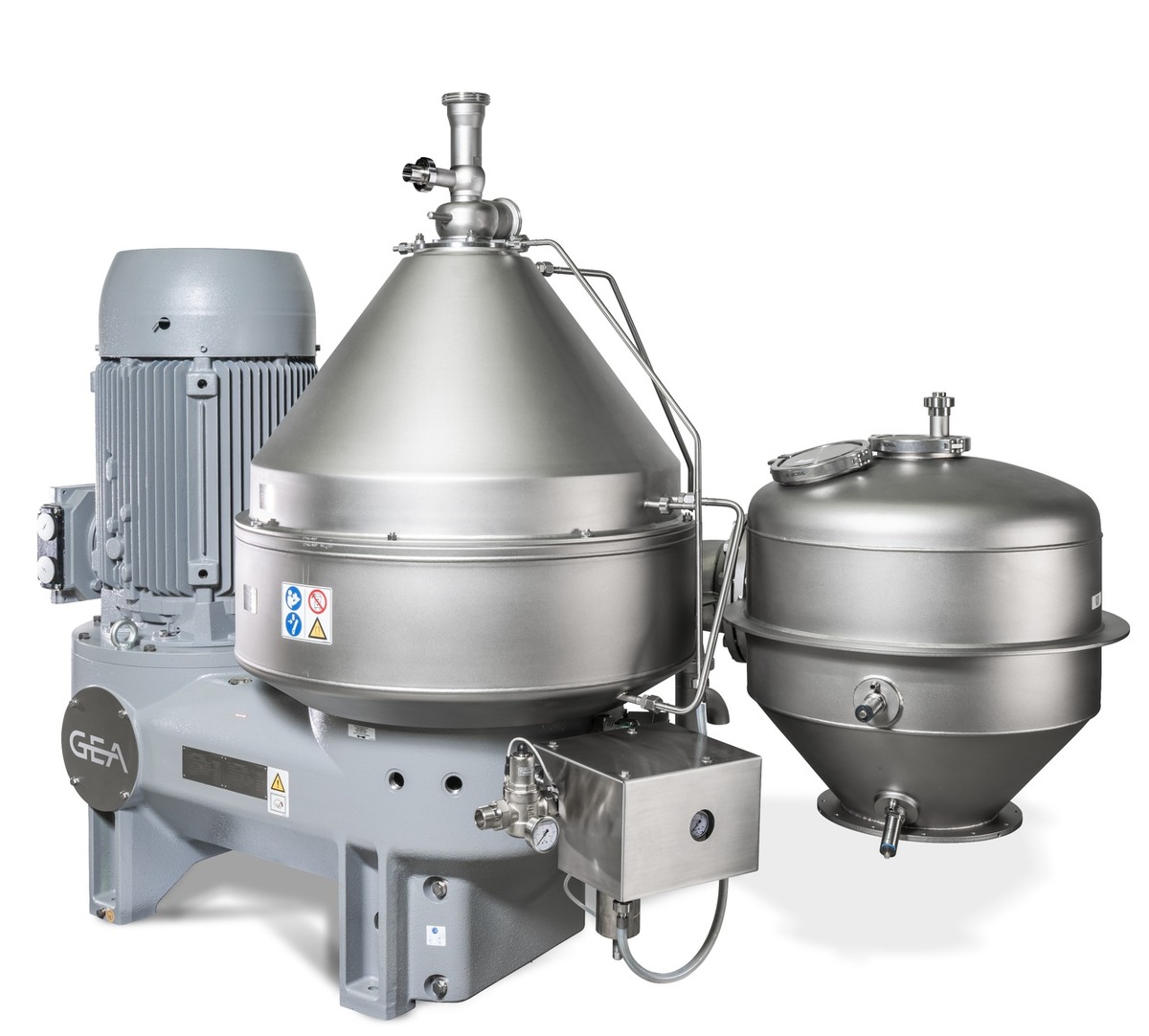
Düsseldorf (Germany), March 18, 2026 – GEA is launching the GSE 150 CPR, a new separator for clarifying pulp-rich citrus juices. The machine is aimed at processors in the medium capacity range who want to keep clarification processes stable even with high and fluctuating solids loads and minimize juice losses in the pulp discharge.
The market pressure behind this is clear: In Brazil, the world's largest orange juice producer, around 48 percent of the Citrus Belt is affected by the plant disease HLB (citrus greening), according to Fundecitrus, a research institute for the citrus industry. Smaller fruits, lower juice content, and more uneven solids content in the pressed product – these are the direct consequences for processing. At the same time, according to Innova Market Insights, there is growing demand for premium products with defined texture profiles, where pulp content is a defined quality parameter, not a variable left to chance.
Continuous discharge as core technology
Technically, the GSE 150 CPR (Constant Pulp Removal) differs from conventional separators through the use of a separating disc in the self-cleaning bowl in combination with a second centripetal pump. This configuration enables the pulp to be continuously conveyed out of the machine under pressure – up to 4 bar. The decisive effect: the solids-holding volume no longer plays a significant role in process stability. Even with highly fluctuating pulp content, as is typical for greening-affected fruit, the clarification process remains stable. Because part of the flow is continuously discharged, CPR separators process around 50 percent more product than a conventional separator of comparable size – a difference that quickly pays for itself during operation.
In operation, the GSE 150 CPR typically requires only two to four solids discharges per hour. Fewer discharges mean fewer process interruptions, less product carryover during discharge, and a more stable restart after each discharge. By comparison, a conventional clarifying separator without continuous pulp discharge can reach up to 30 discharges per hour under high solids loading – with correspondingly higher juice losses and declining clarification performance.
Adjusting pulp content instead of just removing it
With pulp-rich citrus juices, it's not just the clarification performance that counts. The decisive factor is how consistently an operator controls pulp content. GEA offers an optional automatic pulp control system. The standard version is time-controlled; the advanced option continuously measures discharge viscosity and adjusts pulp flow accordingly, minimizing juice losses during operation. For producers who supply different markets with different pulp profiles, this shortens changeover times between batches and reduces losses caused by imprecise control.
The separator is designed for clarifying pulp-rich citrus juices – orange juice, grapefruit juice, lemon juice – and is also suitable for pulp washing processes and cloudy peel extract. As design example, GEA cites capacities of up to 17,000 liters per hour for orange juice and up to 12,000 liters per hour for lemon juice; the achievable performance depends on the product and solids content.
“When raw fruit quality and solids content fluctuate more strongly, process stability becomes an economic lever. The GSE 150 CPR continuously discharges pulp under pressure and requires only a few discharges per hour – this makes clarification processes more robust and reduces product losses,” says Rüdiger Flocke, Area Sales Manager Business Line Beverage, GEA.
Technical design and hygiene
All components that come into contact with the product are made of stainless steel; the seals meet food processing requirements. The separator is fully CIP-capable. For solids discharge, the bowl is opened and closed hydraulically with water. The drive is powered by a low-maintenance flat belt on a standard three-phase motor rated at 30 kilowatts. The bowl rotates at 5,300 revolutions per minute.
For operators with high availability requirements, the GEA InsightPartner Separation Monitoring is available as an option. Among other things, this online condition monitoring system continuously records vibrations and forms the basis for condition-based maintenance.
Portfolio addition in the medium capacity range
The GSE 150 CPR complements GEA's existing CPR series, which includes the GSI 300 CPR, and is aimed at companies that have previously had to rely on machines that were too large or operated with excessively high discharge frequencies. For processors who are investing in professional separation technology for the first time in growing markets such as Egypt, Turkey, or Southeast Asia, the machine offers a cost-efficient entry point that balances investment costs and throughput.
Industry background
The global citrus industry faces growing pressure. On the raw materials side, climate extremes and plant diseases are exacerbating volatility: Extreme weather in Brazil's Citrus Belt – in 2025, the region recorded around 55 percent less rainfall than usual during critical vegetation phases – is hitting an industry that is already struggling with the consequences of HLB. Global stocks of Brazilian orange juice concentrate (FCOJ) reached a historic low of 146,300 tons in 2025. Under these conditions, processing losses feed directly through to margins.
On the market side, requirements are shifting: according to market studies on the juice and packaged juice segment by Custom Market Insights, the global juice market is growing at around four percent annually, often driven by 100 percent juices, functional beverages, and premium products. In Europe, trend analyses by Innova Market Insights show stronger consumer preference for natural products, quality, and products that differentiate themselves through texture and pulp content. At the same time, according to the US Department of Agriculture (USDA), the use of oranges for processing is increasing significantly in countries such as Egypt, creating new demand for efficient process technology.
Technical specifications GSE 150 CPR
- Typical solids discharge: 2 to 4 per hour
- Maximum discharge pressure: 4 bar
- Bowl speed: 5,300 rpm
- Drive power: 30 kW
- Orange juice throughput (approximate value):up to 17,000 l/h
- Lemon juice throughput (guideline value): up to 12,000 l/h
- Options: Automatic pulp control (flow/viscosity-controlled), condition monitoring GEA InsightPartner Separation Monitoring
Sources
- United States Department of Agriculture/USDA (2026): Citrus: World Markets and Trade (Circulars/Reports)
- United States Department of Agriculture/USDA (2026): Citrus Annual, Brazil, with data from Fundecitrus
- Innova Market Insights (2025): Juice market trends in Europe. Consumers are focusing on immune
- Custom Market Insights (2026): Global Packaged Juice Market Size, Trends, Share 2033 - CMI
NOTES TO THE EDITOR
- More information about GEA
- To the GEA Media Center
- Follow GEA on LinkedIn, Youtube
Contact Media Relations
GEA Group Aktiengesellschaft
Fanny Förster
Ulmenstr. 99, 40476 Düsseldorf, Germany
Phone +49 211 9136-1504
 fanny.foerster @gea.com
About GEA
GEA is one of the world’s largest suppliers of systems and components to the food, beverage and pharmaceutical industries. The international technology group, founded in 1881, focuses on machinery and plants, as well as advanced process technology, components and comprehensive services. For instance, every second pharma separator for essential healthcare products such as vaccines or novel biopharmaceuticals is produced by GEA. In food, every fourth package of pasta or every third chicken nugget are processed with GEA technology.
With more than 18,000 employees, the group generated revenues of about EUR 5.5 billion in more than 150 countries in fiscal year 2025. GEA plants, processes, components and services enhance the efficiency and sustainability of customers’ production. They contribute significantly to the reduction of CO2 emissions, plastic usage and food waste. In doing so, GEA makes a key contribution toward a sustainable future, in line with the company’s purpose: ”Engineering for a better world.”
GEA is listed on the DAX, the STOXX® Europe 600 Index and is also a constituent of the leading sustainability indices DAX 50 ESG, MSCI Global Sustainability and Dow Jones Best-in-Class World.
More information can be found online at gea.com.
If you do not want to receive any further information from GEA, please send an e-mail to pr@gea.com.
About the GEA Foundation
The GEA Foundation, established in 2025 by GEA Group, supports global and local projects in STEM education, child poverty reduction, infrastructure access and disaster relief. Through its Mission 30 strategy, GEA commits to donating one percent of annual net profit to build resilient communities.
More information can be found online at gea.com/foundation.
.jpg.jpg)