

Turkish paradox: Improved public goods amid democratic decline, 'institutional decay'
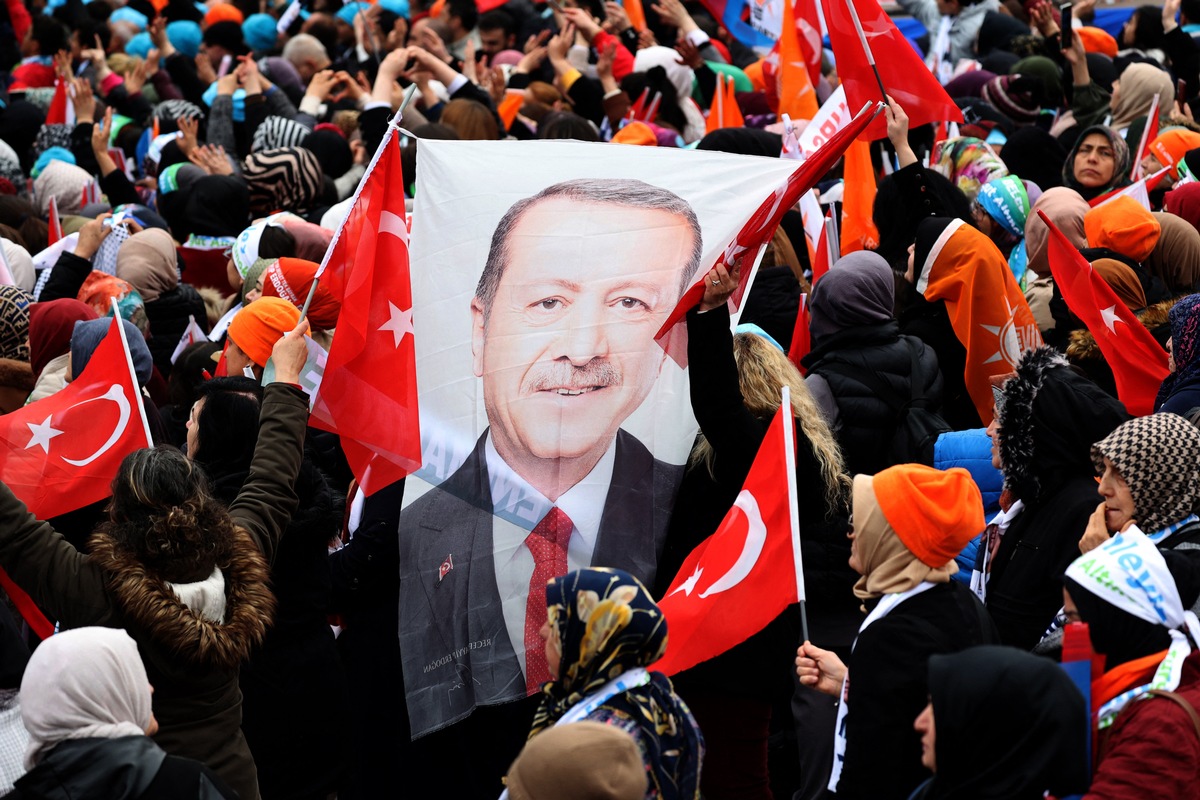
- Photo Info
- Download
Los Angeles/DNA (ots)
El Salvador, Iran, Nicaragua, Russia, and Venezuela is not a list of countries that are enmeshed in Western alliances. But they are part of a group of democratic backsliders on a list that includes NATO member Turkey, which for years in the early 2000s was also in accession talks with the European Union.
This is a list of countries that - according to the newly released 2026 Berggruen Governance Index (BGI) - once had some degree of electoral competition but have now become autocracies.
The report, released Wednesday by an international group of governance scholars, analyses measurable benchmarks for democratic accountability, state capacity and provision of public goods. The authors group 145 countries into four categories: consolidated democratic states, capacity-constrained states, authoritarian and hybrid states, and low-capacity developing states.
"Turkey's governance trajectory reveals one of the most dramatic democratic reversals among the 145 countries included in the BGI, featuring a systematic dismantling of democratic accountability. At the same time, however, it has seen broadly sustained public goods provision," the report stated.
Covering 2000-2023, the study of global governance finds that relatively few countries changed enough during that period to move between the four clusters. While four authoritarian countries - Iraq, Kyrgyzstan, Malaysia, and Tunisia - were able to move into the group of capacity-constrained states, Turkey has moved in the other direction under Recep Tayyip Erdogan's 23-year rule as prime minister and now president.
A mayor of Istanbul in the 1990s from an Islamist background, he campaigned in the constitutionally secular country as a social conservative. He could have blazed a trail in the Muslim world as a modern, center-right democrat - but instead he steadily consolidated power while winning elections to stay in office. According to the academics, Erdogan's Turkey became an ever less competitive autocracy.
While Turkish democracy was always fragile, with a history of military intervention in politics, by the early 2000s its democratic accountability score in the BGI was slightly above the global average. But a "long and accelerating decline began in 2006," the authors wrote.
On the BGI's 100-point scale, Turkey fell from a peak of 72 for democratic accountability to 42 as of 2023.
The democratic setbacks "reflect deep societal divisions sharpened by the Kurdish question and Erdogan's polarizing governance style," the BGI noted. State capacity, meanwhile, eroded rapidly under the pressure of centralized executive power from a score of 48 in 2000 to 28 in 2023. Yet public goods provision - which has risen steadily across most of the world - improved in Turkey from 70 to 80 in the same period, thanks to infrastructure investment and economic growth.
The study cites Turkey's performance as a "paradox of sustained economic investment alongside institutional decay."
The full report, ' 2026 Berggruen Governance Index - The Four Worlds of Governance', can be viewed and downloaded from the website of the UCLA's Luskin School.
----------------------------------------------------
This text and the accompanying material (photos and graphics) are an offer from the Democracy News Alliance, a close co-operation between Agence France-Presse (AFP, France), Agenzia Nazionale Stampa Associata (ANSA, Italy), The Canadian Press (CP, Canada), Deutsche Presse-Agentur (dpa, Germany) and PA Media (PA, UK). All recipients can use this material without the need for a separate subscription agreement with one or more of the participating agencies. This includes the recipient's right to publish the material in own products.
The DNA content is an independent journalistic service that operates separately from the other services of the participating agencies. It is produced by editorial units that are not involved in the production of the agencies' main news services. Nevertheless, the editorial standards of the agencies and their assurance of completely independent, impartial and unbiased reporting also apply here.
Contact:
Democracy News Alliance
Christian Röwekamp
roewekamp.christian@dpa.com
Original content of: Democracy News Alliance, transmitted by news aktuell