
New Study Shows Low Environmental Impact by Cotton made in Africa Organic Cotton from Tanzania
- Photo Info
- Download
- 6 additional media items
One document
Hamburg, 2026-03-31. Today, the Aid by Trade Foundation (AbTF) is announcing the results of a comprehensive life-cycle analysis (LCA) for cotton produced in Tanzania under the Cotton made in Africa Organic (CmiA Organic) standard. The study emphasises the small ecological footprint of CmiA Organic verified cotton. This can largely be traced back to the absence of synthetic pesticides, artificial fertilisers, and artificial irrigation. Consequently, CmiA Organic cotton can help the textile industry meet regulatory requirements as well as science-based targets. The results also show that the consequences of climate change threaten the livelihoods of these cotton farmers, even though the type of agriculture they practise barely contributes to climate change.
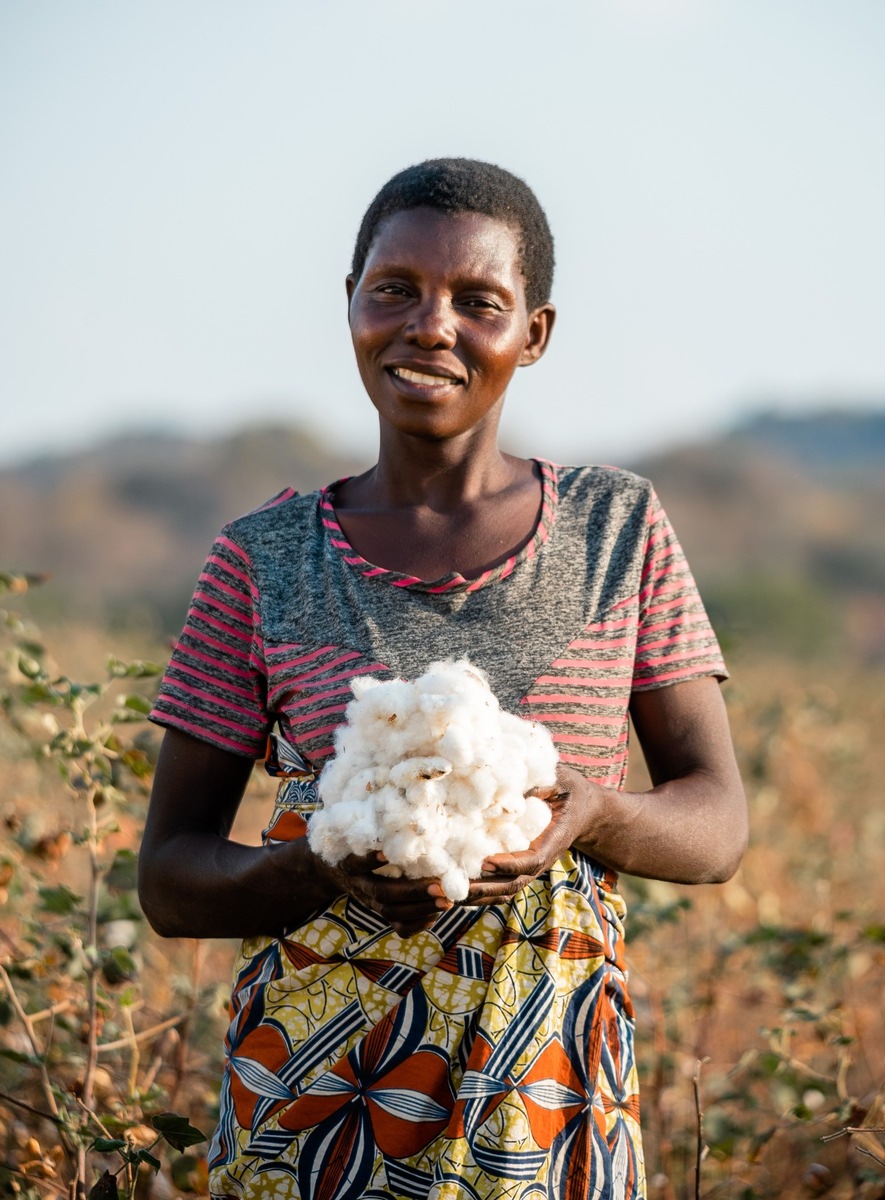
Part of a larger, critically reviewed LCA from Textile Exchange, the study quantifies the environmental impact of CmiA cotton from Tanzania at all stages from cultivation to ginning, showing that the cotton is produced following an environmentally friendly, rainfed model. This approach is characterised by smallholders completely avoiding the use of mineral fertilisers and synthetic pesticides, only limited mechanisation, and no genetically modified seeds. As a result, ecological threats posed by industrial cotton-production systems—such as fertiliser production or the consumption of what is termed “blue water” [1]—are negligible for CmiA Organic cotton from Tanzania. For example, less than one kilogram of CO2 equivalents is emitted per kilogram of ginned cotton fibres. Biodiversity-promoting measures and natural methods, such as the use of biochar or bokashi, increase soil fertility while protecting groundwater.
CmiA Organic Helps the Textile Industry Meet Regulatory Requirements and Science-Based Targets
Alexandra Perschau, the head of Standards & Outreach at the Aid by Trade Foundation, states, “The LCA provides valuable insights into the environmental performance of CmiA Organic cotton, reaffirming our commitment to transparency and to continuous improvement in environmental protection. Its results underline the inherent sustainability benefits of practising organic farming in accordance with the CmiA Organic standard, which prioritises ecological balance and the well-being of farmers. Fashion brands and textile companies that use CmiA Organic cotton have an opportunity to meet their science-based targets as well as the increasing regulatory requirements for transparency.” "Sourcing Cotton made in Africa Organic supports our transition from conventional cotton to organic cotton production with increased transparency. Collaborations like the one we have with Aid by Trade Foundation are essential in order for us to reach our organic cotton targets," states Danique Lodewijks, Sustainable Raw Materials Manager at Bestseller.
Climate Justice for African Smallholders
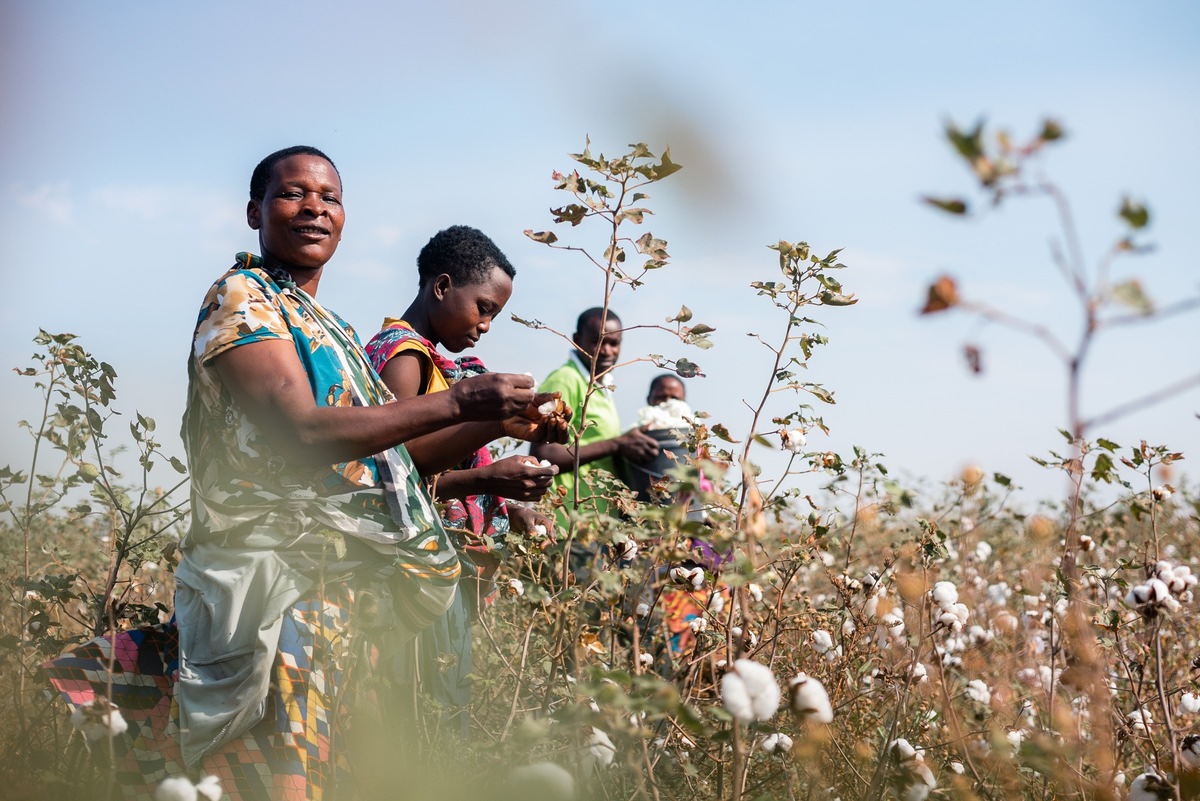
The result of the LCA study also underlines the issue of climate justice for smallholders in cotton-growing areas. They suffer immensely from the effects of climate change, as droughts, unpredictable precipitation patterns, and torrential rainfall make it difficult to sow, grow, and harvest the cotton plants. The cotton plants are weakened and increasingly affected by pests. Consequently, cotton farmers are finding their livelihoods under existential threat—even though the type of agriculture they practise barely contributes to climate change, as the study now shows. This makes Cotton made in Africa’s holistic approach all the more important. It focusses on preserving biodiversity, maintaining soil health, and protecting natural resources. It also provides comprehensive training, which enables cotton producers to make their farms resilient to climate change, thereby creating a future for themselves, their families, and cotton cultivation as a whole.
Notes to the editor:
- The total impact on climate change for TanzanianCmiAOrganic cotton is about 0.89 kilograms of CO2equivalents (kg CO2e) per kilogram offibres. Field emissions from nitrogen turnover are the main cause, making up about 0.59 kg. Energy consumption and the ginnery represent a secondary hotspot with about 0.20 kg CO2e. Other life-cycle phases, such as machine use and transport,contribute0.10 kg CO2e. CO2e.
- In the LCA commissioned by Textile Exchange, the reported climate change impacts of 0.89 kg CO2e per kilogram offibreare at the lower end of the broader range of the Cotton LCA Study (0.44 to 4.17 kg CO2e per kilogram offibres). At the same time, the study stresses that global variability in methodologies, data quality, and cultivation intensities mean that no comparative statements should be derived from its results.
- The complete study can be downloaded here: https://cottonmadeinafrica.org/wp-content/uploads/LifeCycleAssessment-CmiAOrganic.pdf
[1] To measure the water footprint, a distinction is made between green, blue, and grey water. Blue water is the amount of surface water and groundwater used to produce a given product.
Press Contact
Christina Ben Bella, e-mail:  christina.benbella@abt-foundation.org
Holger Diedrich, e-mail:  holger.diedrich@abt-foundation.org
Aid by Trade Foundation | Werner-Otto-Straße 13 b | 22197 Hamburg | Germany
About Cotton made in Africa Organic
Cotton made in Africa (CmiA) Organic is an internationally recognised standard for independently verified organic cotton. Produced by small-scale farmers in Africa South of the Sahara, CmiA Organic goes beyond conventional organic certification. Its core values include providing social and economic support to African farmers and their communities. Additionally, it offers transparent traceability from cotton bale to textile. It is 100 percent GMO-free and maintains a clear focus on protecting human rights as well as biodiversity, soil, and water. More than 30 percent of African cotton is verified under CmiA and CmiA Organic. Over 60 textile companies and fashion brands—from Bestseller to OTTO—use CmiA or CmiA Organic cotton, enabling around 800,000 small-scale farmers to practise ecologically and economically resilient agriculture, to improve their families’ living standards, and to protect our planet’s ecosystems. In addition, CmiA invests in rural communities through projects in the areas of education, environmental protection, health, and women’s empowerment. CmiA Organic is one of four sustainability standards under the umbrella of the Aid by Trade Foundation (AbTF), a Hamburg-based foundation established by Prof. Dr Michael Otto. Learn more at: https://cottonmadeinafrica.org/en/organic/
About the Aid by Trade Foundation
Founded by the entrepreneur Prof. Dr Michael Otto in 2005, the Aid by Trade Foundation (AbTF) is an internationally renowned non-profit organisation that works throughout the world to promote sustainable raw materials. Its work makes a decisive and measurable contribution to improving the living conditions of people and animals while protecting the environment. With its verified raw materials Cotton made in Africa® (CmiA), Cotton made in Africa Organic (CmiA Organic), Regenerative Cotton Standard® (RCS) and The Good Cashmere Standard® (GCS), the foundation is putting its goals into practice. In view of the increasing challenges posed to small farmers and textile companies by the consequences of climate change and market shifts, the standards are of fundamental importance for their resilience and sustainability. The foundation works in close cooperation with industry experts and with specialists in animal and nature protection. More information at: www.aidbytrade.org