
Sedus asks: “Is there a problem with focus in the office?”
 | |
| Quelle: Sedus Stoll AG | |
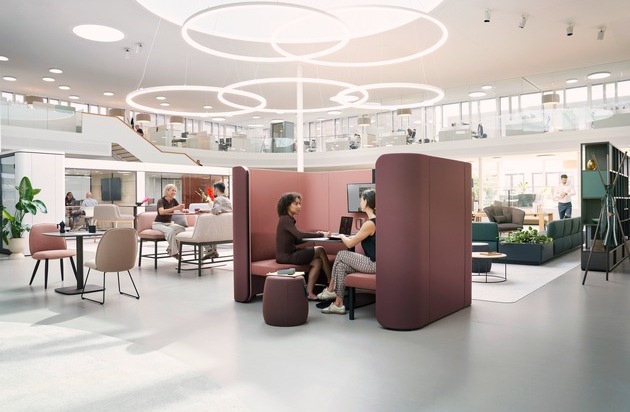
When designing modern offices, it is essential to organise spaces that support different types of concentration. Some areas can be open and sociable. Others need to be quiet and private. Copyright: Sedus / More information via ots and www.presseportal.de/en/nr/43223 / The use of this image for editorial purposes is permitted and free of charge provided that all conditions of use are complied with. Publication must include image credits.

Dogern (ots) -
We live in a world that constantly demands our attention. Yet in the workplace, it’s increasingly the built environment itself – not just digital noise – that fragments our focus. From visual overstimulation to uncontrolled acoustic spillover, many offices unintentionally create conditions that work against concentrated work.The voice AI specialist Saima recently reported that around two hours of working time are lost each day due to distractions in the office. Over the course of a year, that adds up to an average of 23 lost working days per employee due to disruptions in their immediate working environment.
“The greatest misunderstanding of the last office decade is the belief that concentration simply means “less noise”. Research clearly shows: people lose focus not because of noise – but because they lack control over their environment,” says Ernst Holzapfel, Marketing Director at Sedus. “Many offices make people tired before they even have a chance to be productive. Good working environments function like an energy filter: they reduce stimuli, stabilise the peripersonal space, and give employees mental strength instead of draining it.”
Deep Working: workstation design that promotes concentration
When designing modern offices, it’s essential to organise spaces that support different types of concentration. Some areas can be open and sociable. Others need to be quiet and private. To achieve this goal, Sedus relies on solutions that support the natural rhythm of concentration and accommodate different sensory needs. “Concentration doesn't just happen,” says Holzapfel. “It needs to be activated. Workplaces that are unbalanced in sensory terms hinder this process – workplaces with a balanced design accelerate it. That’s why our approach focuses less on individual products and more on cognitive zoning principles: environments that consciously modulate acoustics, light, materiality and spatial density to stabilise attention. Whether through acoustically protected micro-environments such as the se:cube, balanced lighting concepts or modular settings that adapt to different working styles – the goal is always the same: the better a space channels mental energy, the greater its impact on people.”
Contact:
Sedus Press
Bernadette Trepte
sedus@real-communications.com
+49 (0) 7751 840